

Key Takeaways
Why Clothing Care Is Worth the Effort
Every time you toss a shirt in the wash or cram a sweater into an overstuffed drawer, small decisions are quietly determining how long that piece will last. Clothing doesn't wear out all at once — it degrades in gradual, preventable ways. Heat weakens fibers. Agitation causes pilling. Poor storage leads to stretching and mildew. None of that is inevitable.
The good news: most effective clothing care habits take seconds. They don't require expensive products or special equipment. And they pay off in a wardrobe that holds up season after season — which is one of the most straightforward ways to get more from what you already own. If you're interested in doing more with fewer pieces, our guide on getting more outfits from fewer clothes is a natural companion to these habits.
Always read and follow the care label before washing any garment.
Care labels encode the manufacturer's tested guidance for that specific fabric blend. Ignoring them is the single fastest way to shrink, fade, or distort a piece beyond recovery. Even experienced home launderers can be caught off guard by blended fabrics that behave differently than expected.
Wash clothes inside out and use a gentle or delicate cycle for most items.
The outer surface of fabric takes the most agitation damage during washing, leading to fading and pilling. Turning garments inside out protects the visible face of the fabric. A gentler cycle reduces mechanical stress on fibers across every load.
Air-dry or use low heat whenever possible instead of high-dryer heat.
High heat is one of the leading causes of fiber breakdown, elastic degradation, and shrinkage. Repeated high-heat drying shortens garment life faster than almost any other single habit. Air-drying is free and preserves fabric structure effectively.
Treat stains as quickly as possible — always before washing.
Stains that sit and dry become chemically bonded to fabric fibers, making them much harder or impossible to remove fully. Heat from washing or drying can permanently set a stain. Acting within minutes of a spill dramatically improves removal odds.
Address small repairs — loose buttons, minor tears, fraying seams — before they escalate.
A loose button ignored becomes a lost button; a small seam split left unworn can widen into an unrepairable gap. Minor textile repairs take two minutes and cost almost nothing. Catching damage early keeps garments in active rotation rather than the donation pile.
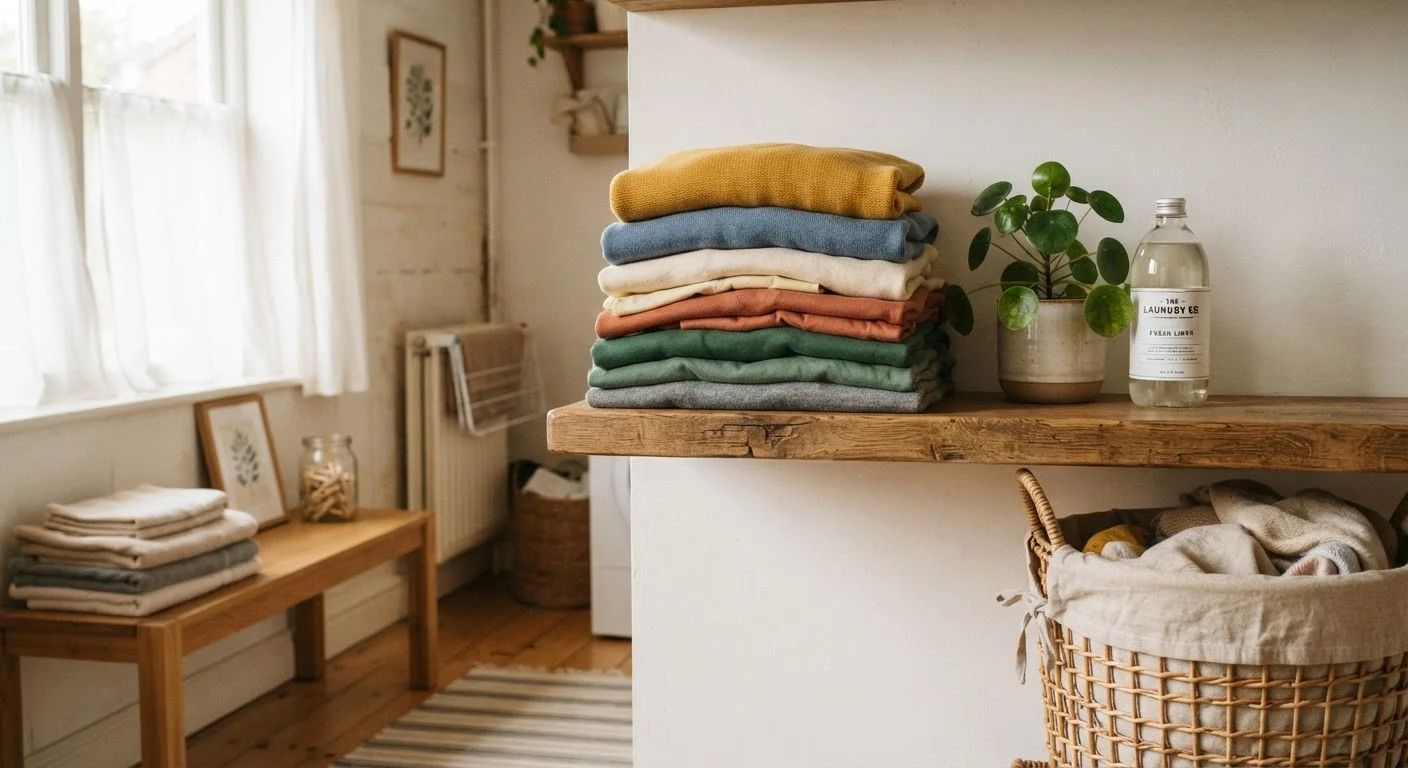
Store knitwear and heavy sweaters folded flat, not hanging.
The weight of a sweater pulls down on hanger-hung fabric over time, causing shoulder bumps and overall distortion that can't be undone. Folding flat distributes the garment's weight evenly and preserves its original silhouette.
The Habits That Actually Make a Difference
Fabric care isn't about being precious — it's about being intentional. The practices below address the most common causes of premature clothing wear: improper washing, excessive heat, careless storage, and ignored repairs.
~80%
Fabric damage linked to washing and drying
Textile care researchers broadly estimate that a large majority of garment wear and fiber degradation stems from laundering habits rather than regular use.
2–3×
Lifespan extension from proper care
Garment industry guidance consistently suggests that correct washing, drying, and storage practices can multiply a piece's usable life by two to three times versus neglectful habits.
Understanding your fabrics is part of this picture too. Natural and synthetic materials have genuinely different care needs, and knowing the basics helps you make smarter decisions at the machine. Our breakdown of natural fibers vs. synthetic fabrics explains what those differences mean for everyday wear and washing.
When In Doubt, Go Colder and Gentler
Cold water and a gentle cycle are safe defaults for the vast majority of everyday clothing. Hot water is only necessary for items like heavily soiled work clothes or towels that genuinely need sanitizing. Defaulting to cold protects colors, fibers, and elastics — and uses less energy in the process.
Storage, Rotation, and Seasonal Care
How you store clothes between wears matters almost as much as how you wash them. Knits stretched over wire hangers lose their shape; delicate fabrics stored in direct sunlight fade. Folding heavy sweaters flat instead of hanging them prevents shoulder distortion. Using breathable garment bags for off-season storage keeps dust and moisture at bay without trapping humidity the way plastic can.
Rotation is an underrated habit. Wearing the same three pieces constantly while others sit idle creates uneven wear — both on your favorites and on the neglected items that can deteriorate from prolonged storage. A seasonal refresh helps keep things balanced. Our seasonal wardrobe transition checklist walks through exactly how to rotate, assess, and store pieces at each change of season.
This article provides general clothing care information for educational purposes. Specific fabric care should follow manufacturer label instructions.