

Key Takeaways
Option A
Natural Fibers
The breathable, time-tested classic.
Best for: Everyday comfort, sensitive skin, and warm-weather wear where breathability matters most.
Option B
Synthetic Fabrics
The durable, low-maintenance modern option.
Best for: Active lifestyles, budget-friendly wardrobes, and pieces that need to hold their shape wear after wear.
If you run warm or live in a hot, humid climate
Natural Fibers
Cotton and linen allow air circulation and wick moisture away from skin, helping you stay cooler throughout the day.
If you want low-maintenance, long-lasting everyday pieces
Synthetic Fabrics
Polyester and nylon resist wrinkles, hold their shape longer, and typically dry faster — great for a busy schedule.
If you have sensitive or reactive skin
Natural Fibers
Natural fibers are less likely to trap heat or cause friction-related irritation, though individual reactions vary.
If you need activewear or moisture-wicking athletic clothing
Synthetic Fabrics
Engineered synthetics are specifically designed to pull sweat away from skin and dry quickly during physical activity.
If you're building a versatile, budget-conscious wardrobe
Natural Fibers
Quality cotton basics often cost less per wear over time due to their durability and easy integration into many outfit combinations.
What We Mean by Natural vs. Synthetic
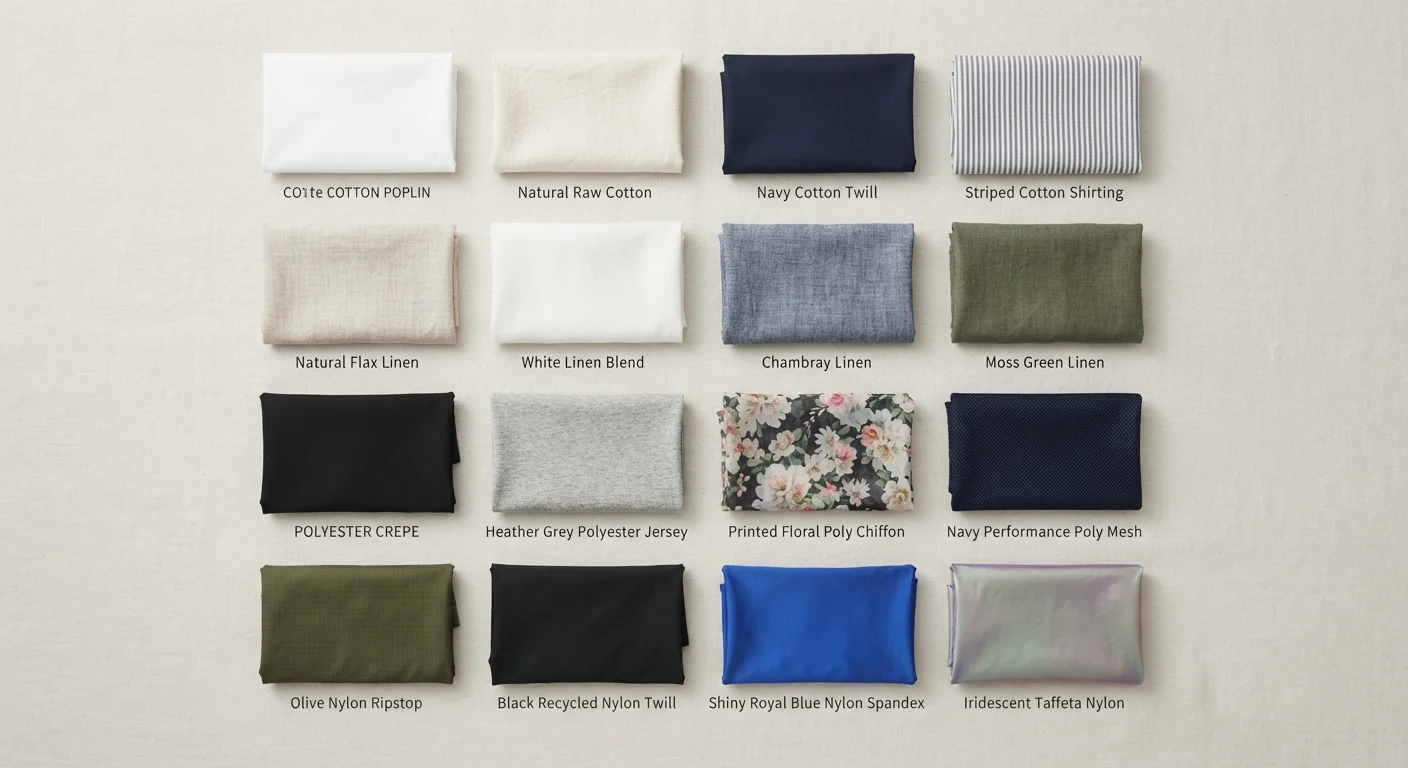
The terms get thrown around constantly on clothing labels, but the distinction is straightforward. Natural fibers are derived from plants or animals — cotton from cotton bolls, linen from flax, wool from sheep, silk from silkworms. Synthetic fabrics are manufactured through chemical processes, typically from petroleum-derived polymers. Polyester, nylon, spandex, and acrylic fall into this category.
A third category — semi-synthetic or regenerated fibers — sits in between. Rayon (viscose) and modal, for example, start with natural cellulose (usually wood pulp) but require heavy chemical processing to become wearable fabric. These behave more like natural fibers in wear but carry some environmental trade-offs of synthetics.
Understanding this basic taxonomy is the first step toward reading clothing labels with confidence — something our guide on fit, fabric, and color basics covers in practical depth.
| Criterion | Natural Fibers | Synthetic Fabrics |
|---|---|---|
| Common examples | Cotton, linen, wool, silk | Polyester, nylon, spandex, acrylic |
| Breathability | Generally high | Low to moderate (varies by weave) |
| Moisture management | Absorbs moisture | Wicks or repels moisture |
| Durability | Good with proper care | High; resists shape loss |
| Wrinkle resistance | Low to moderate | Moderate to high |
| Care complexity | Moderate; heat-sensitive | Generally easy; machine washable |
| Environmental footprint | Biodegradable; farming impact varies | Petroleum-based; microplastic shedding |
| Typical price range | Varies widely; basics affordable | Varies widely; often budget-friendly |
Comfort, Breathability, and Skin Feel
Natural fibers — especially cotton and linen — are widely regarded as more breathable for everyday wear. Their looser molecular structure allows air movement and absorbs moisture rather than repelling it. Linen, in particular, is a warm-weather standout: it gets softer with washing, dries quickly, and stays relatively cool against skin.
Synthetics have historically had a reputation for feeling warm or plastic-y, but modern engineered fabrics have closed much of that gap. Moisture-wicking polyester blends, for instance, are now the standard for athletic and outdoor clothing because they move sweat away from skin and dry faster than cotton during physical exertion.
For everyday use, the comfort edge generally goes to naturals — but the gap narrows considerably in cooler weather or in blended fabrics. A cotton-polyester blend T-shirt, for example, often delivers enough breathability for daily wear while resisting the shrinkage that pure cotton is prone to.
~35%
Global fiber production: cotton's share
Cotton remains one of the most widely produced textile fibers globally, according to industry estimates from the Food and Agriculture Organization of the United Nations.
~54%
Global fiber production: polyester's share
Polyester has surpassed all natural fibers combined in global production volume, reflecting its dominance in fast fashion and technical apparel, per textile industry reports.
700,000+
Microplastic fibers shed per wash cycle
Research published in environmental science journals suggests a single synthetic garment can shed hundreds of thousands of microplastic fibers per wash, raising environmental concerns.
Durability and Garment Longevity
Synthetics tend to win on raw durability. Polyester holds its shape and color better through repeated washing; nylon resists abrasion and stretching. These are the materials you'll find in workwear, outerwear, and bags for exactly that reason.
Natural fibers, while not fragile, require more attentive care to last. Cotton can shrink in high heat, linen wrinkles easily, and wool can felt or pill if agitated incorrectly. That said, well-cared-for natural fiber garments can last for years — sometimes decades. The key is following care labels closely, which our piece on clothing care habits that extend garment life breaks down in real, actionable terms.
One durability caveat for synthetics: they can develop pilling and static over time, particularly in high-friction areas like underarms and inner thighs. Natural fabrics may show wear differently — thinning or fading — but often feel more graceful as they age.
What About Blended Fabrics?
Many everyday garments — especially T-shirts and activewear — combine natural and synthetic fibers in a single fabric. A cotton-polyester blend, for instance, often pairs cotton's softness with polyester's durability and shape retention. Reading the fiber content label (required on clothing sold in the U.S.) tells you the percentage breakdown, which directly affects how the garment will feel, last, and need to be washed.
Care, Cost, and Wardrobe Strategy
Synthetics are generally easier to care for: cold machine wash, tumble dry low, and most come out looking presentable without ironing. Natural fibers often need cooler water temperatures, lower or no-heat drying, and occasionally hand washing (wool, silk). Linen and cotton usually require pressing if you want a crisp look.
On price, neither category has a clear monopoly. Cotton basics are often very affordable, while premium natural fibers like merino wool or silk command higher prices. Polyester pieces vary enormously — from budget-friendly basics to high-performance technical gear at a premium.
For a well-rounded, budget-conscious wardrobe, a mix of both usually makes the most sense. Cotton or linen for everyday tops and casual wear; synthetics or blends for outerwear, activewear, and high-use basics that need to hold up. If you're thinking about which pieces to anchor your closet around, wardrobe essentials worth investing in is a solid place to start. And when building outfits from what you already own, getting more outfits from fewer clothes can help you make the most of any fabric mix.