

Key Takeaways
Lower upfront cost than buying new
Refurbished phones are typically priced 20–50% below the equivalent new device, depending on age and condition grade. For consumers who don't need the latest model, this gap can be substantial.
Access to higher-spec hardware at lower price
A refurbished flagship from two years prior may outperform a new budget phone in camera quality, processor speed, and display — offering a better experience at a comparable price point.
Reduced environmental footprint
Extending a phone's usable life delays the manufacturing demand for new devices, which are resource-intensive to produce. Choosing refurbished is one of the more tangible ways individual consumers can reduce electronics waste.
Manufacturer-certified programs offer real quality assurance
Programs run by original manufacturers include documented inspection, genuine replacement parts, and testing protocols. Some even restore devices to near-new cosmetic and functional condition with a limited warranty included.
Often sold unlocked for carrier flexibility
Refurbished phones are frequently sold carrier-unlocked, giving buyers the flexibility to choose or switch carriers — a meaningful advantage over subsidized locked devices tied to a specific network.
No universal grading standard across sellers
Grade labels like 'Excellent' or 'Grade A' mean different things from different sellers. Without a standardized definition, buyers must read each seller's specific grading criteria rather than relying on labels alone.
Battery degradation often not fully disclosed
Lithium-ion batteries degrade with each charge cycle. A refurbished phone may arrive with 75–85% of its original battery capacity, reducing daily usage time and accelerating the need for replacement.
Shorter, more limited warranty coverage
Most refurbished phones come with 90-day to one-year warranties, compared to the one-year standard on new devices. Third-party refurbishers may offer even less coverage, and accidental damage is rarely included.
Potential software or hardware issues not caught during inspection
Refurbishment quality control varies. Some issues — intermittent connectivity problems, speaker distortion under load, or degraded water resistance — may not surface during standard inspection.
Shorter software support window remaining
A refurbished phone that is two or three generations old may already be partway through its manufacturer security update window, meaning the buyer gets fewer years of guaranteed OS support than someone buying new.
Risk of counterfeit or misrepresented listings
The refurbished category attracts fraudulent listings, particularly on open marketplaces. Devices described as refurbished may have non-genuine replacement screens or batteries that underperform or fail sooner.
Our Verdict
Refurbished phones can represent real savings without sacrificing core functionality — but only when purchased from a source with transparent grading, a meaningful warranty, and a clear return policy. The category rewards careful research and punishes impulse buying. Treat it like any significant purchase: read the fine print, verify compatibility, and understand exactly what 'refurbished' means from that specific seller.
Best for budget-conscious consumers who are willing to do moderate research upfront, are comfortable with a one- to two-generation-old device, and prefer buying from manufacturer-certified or well-reviewed programs over private listings.
What 'Refurbished' Actually Means
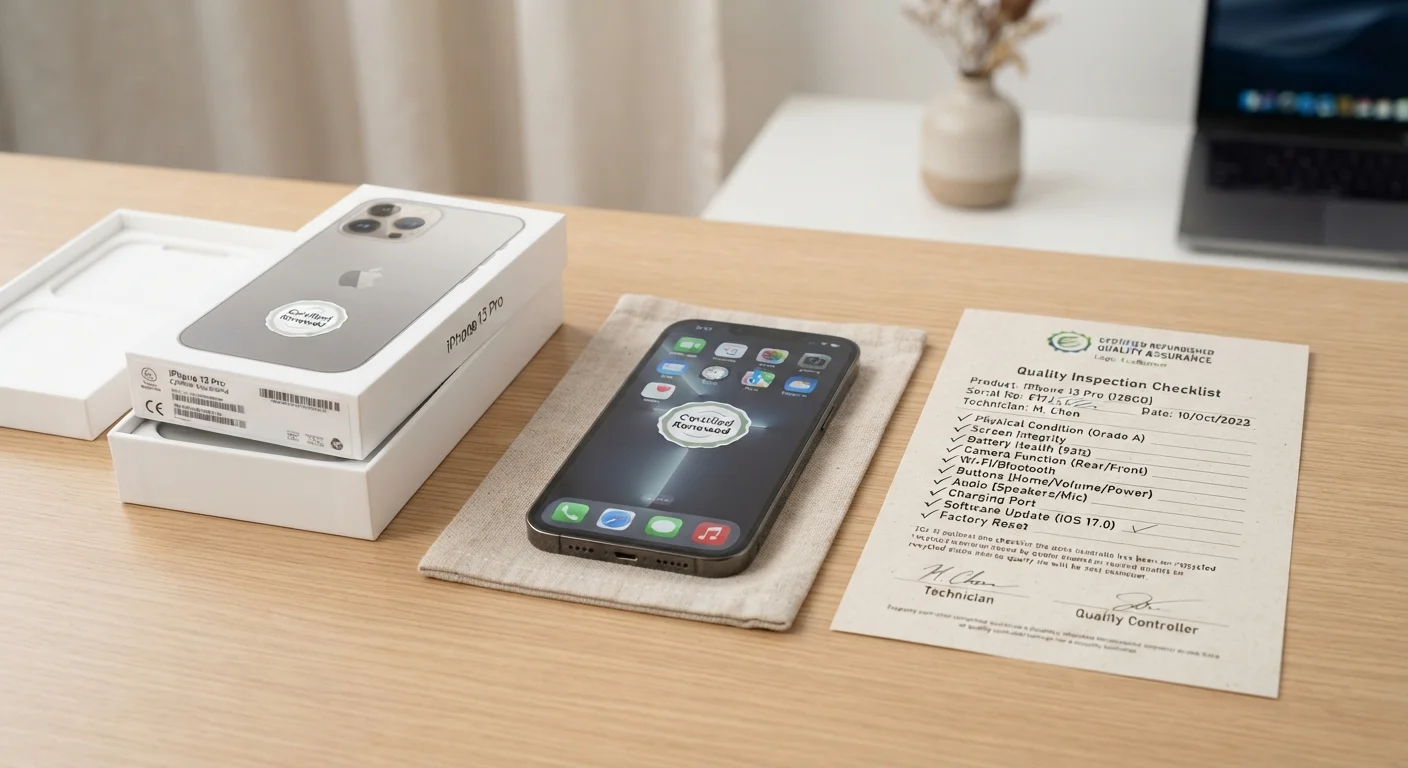
The word refurbished covers an unusually wide range of conditions. At one end, a manufacturer-certified refurbished phone has been returned, inspected, repaired to a documented standard, and tested before resale. At the other end, a third-party listing labeled 'refurbished' may mean little more than a cosmetic wipe-down.
Grading systems — commonly labeled Grade A, B, or C — are intended to signal condition, but there is no industry-wide standard governing what each grade means. One seller's Grade A may allow faint screen scratches; another's may not. Reading the grading definitions specific to each seller, rather than assuming a universal meaning, is essential before any purchase.
It's also worth distinguishing refurbished from used. A used phone sold peer-to-peer has typically undergone no formal inspection. A properly refurbished phone should have documented testing, any faulty components replaced, and a factory reset confirmed. That process costs money, which is reflected — though not always transparently — in the price.
Certified Refurbished vs. Seller-Refurbished
The term 'certified refurbished' is meaningful only when the certifying party is identified. A manufacturer-certified program operates under the maker's own standards and often uses genuine parts. A seller-certified program is self-certified — the standards are set and enforced by the seller, with no third-party verification. Both may use the word 'certified,' so looking at who is doing the certifying matters as much as the label itself.
The Genuine Advantages
When the sourcing is solid, refurbished phones carry real benefits worth considering alongside any new-device purchase.
Lower upfront cost than buying new
Refurbished phones are typically priced 20–50% below the equivalent new device, depending on age and condition grade. For consumers who don't need the latest model, this gap can be substantial.
Access to higher-spec hardware at lower price
A refurbished flagship from two years prior may outperform a new budget phone in camera quality, processor speed, and display — offering a better experience at a comparable price point.
Reduced environmental footprint
Extending a phone's usable life delays the manufacturing demand for new devices, which are resource-intensive to produce. Choosing refurbished is one of the more tangible ways individual consumers can reduce electronics waste.
Manufacturer-certified programs offer real quality assurance
Programs run by original manufacturers include documented inspection, genuine replacement parts, and testing protocols. Some even restore devices to near-new cosmetic and functional condition with a limited warranty included.
Often sold unlocked for carrier flexibility
Refurbished phones are frequently sold carrier-unlocked, giving buyers the flexibility to choose or switch carriers — a meaningful advantage over subsidized locked devices tied to a specific network.
For consumers thinking carefully about upgrade timing, the savings on refurbished devices can also free up budget for a better service plan. The real cost of a cell phone plan article breaks down where carrier fees accumulate — context worth having when calculating total device cost.
The Risks You Need to Weigh
Refurbished phones carry trade-offs that new phones do not, and some are non-obvious until after purchase.
No universal grading standard across sellers
Grade labels like 'Excellent' or 'Grade A' mean different things from different sellers. Without a standardized definition, buyers must read each seller's specific grading criteria rather than relying on labels alone.
Battery degradation often not fully disclosed
Lithium-ion batteries degrade with each charge cycle. A refurbished phone may arrive with 75–85% of its original battery capacity, reducing daily usage time and accelerating the need for replacement.
Shorter, more limited warranty coverage
Most refurbished phones come with 90-day to one-year warranties, compared to the one-year standard on new devices. Third-party refurbishers may offer even less coverage, and accidental damage is rarely included.
Potential software or hardware issues not caught during inspection
Refurbishment quality control varies. Some issues — intermittent connectivity problems, speaker distortion under load, or degraded water resistance — may not surface during standard inspection.
Shorter software support window remaining
A refurbished phone that is two or three generations old may already be partway through its manufacturer security update window, meaning the buyer gets fewer years of guaranteed OS support than someone buying new.
Risk of counterfeit or misrepresented listings
The refurbished category attracts fraudulent listings, particularly on open marketplaces. Devices described as refurbished may have non-genuine replacement screens or batteries that underperform or fail sooner.
Carrier compatibility deserves special attention. Refurbished phones are frequently sold unlocked, which is often an advantage — but not always. If a device was originally built for a specific network band configuration, it may underperform on another carrier even if technically 'unlocked.' The difference between locked and unlocked phones explains what to check before assuming compatibility.
How to Evaluate a Refurbished Listing
The quality of a refurbished phone purchase is largely determined before the transaction. A few specific checks reduce risk significantly.
- Source hierarchy: Manufacturer-certified programs (where the original maker handles refurbishment) offer the strongest quality controls. Established third-party refurbishers with documented processes and long-standing return policies are the next tier. Private listings with no return option carry the highest risk.
- Battery health disclosure: Ask for or look for a stated battery capacity percentage. Many devices degrade to 80% or below before resale. Anything under 80% will likely require replacement within months of purchase.
- Warranty length and scope: A 90-day warranty is common but thin. Programs offering 12 months of coverage on refurbished hardware are meaningfully better. Read what the warranty excludes.
- Return window: A 30-day return window gives enough time to test the device under real-world conditions. Shorter windows — or none at all — are a warning sign.
- IMEI check: Confirm the device's IMEI number is not reported stolen or blacklisted. Free IMEI lookup tools exist for this purpose.
~80%
Battery threshold below which replacement is typically needed
Apple's own guidance suggests battery replacement when capacity falls below 80%; similar thresholds apply broadly across smartphone platforms.
20–50%
Typical price reduction vs. equivalent new device
Pricing varies widely by model age, condition grade, and seller type; manufacturer-certified programs tend to discount less than open-market resellers.
If you're considering selling or passing on your current phone as part of an upgrade, the checklist before handing over a used phone covers what to back up and sign out of before any device changes hands.