

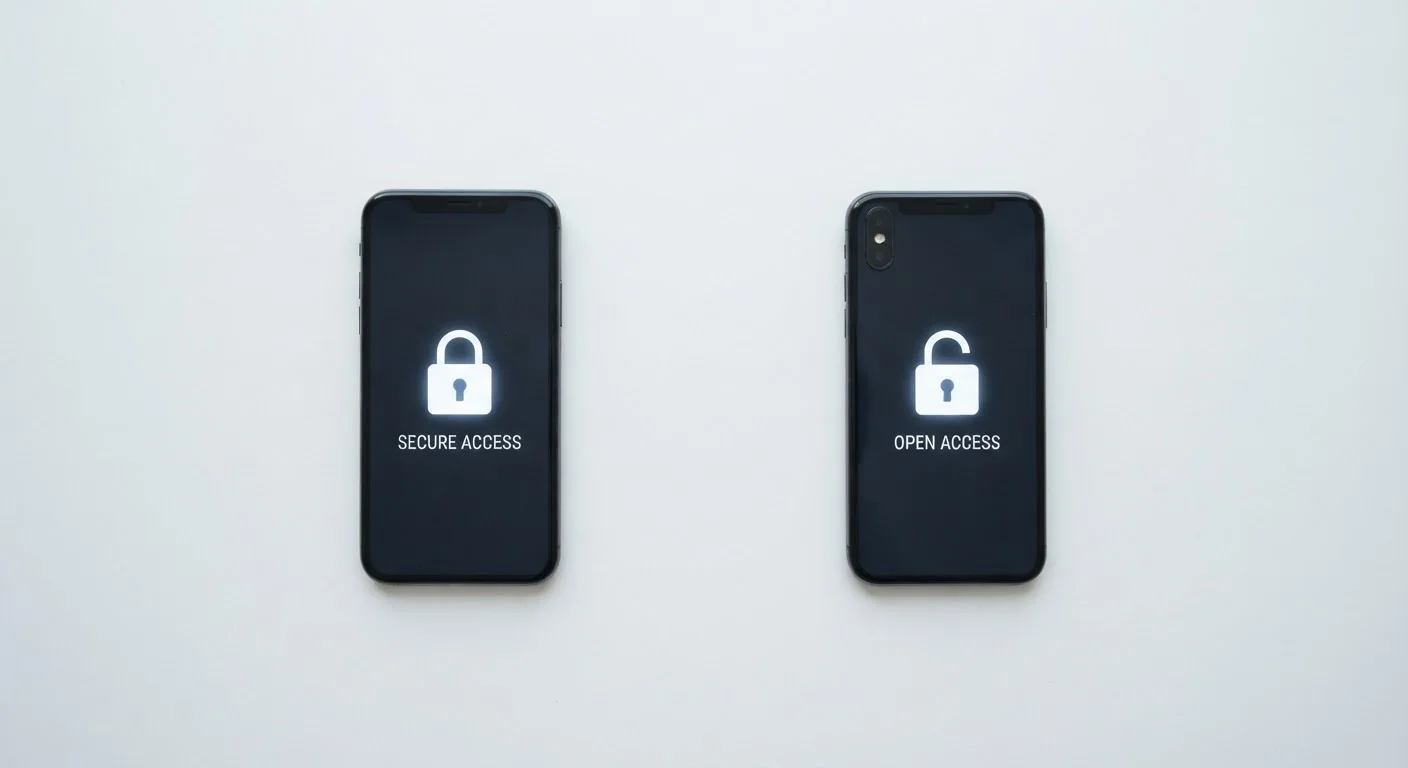
Key Takeaways
Option A
Carrier-Locked Phone
The subsidized, network-tied option.
Best for: Consumers who plan to stay with one carrier long-term and want lower upfront device costs.
Option B
Unlocked Phone
The flexible, network-agnostic choice.
Best for: Travelers, frequent switchers, and buyers who want full control over their carrier relationship.
If you travel internationally and want to use local SIM cards
Unlocked Phone
An unlocked device lets you swap in a local SIM abroad, avoiding expensive roaming fees and keeping you on fast local networks.
If you want the lowest possible upfront device cost
Carrier-Locked Phone
Carriers often subsidize locked phones through installment plans or promotions, reducing what you pay at purchase — though you're committing to their service.
If you plan to switch carriers within the next year or two
Unlocked Phone
An unlocked phone moves with you to a new network without waiting periods or unlock requests, making the transition much simpler.
If you're buying a refurbished or secondhand device
Unlocked Phone
An unlocked secondhand phone gives you immediate flexibility without needing to verify the previous owner's carrier unlock status.
If you're on a family plan and satisfied with your current carrier
Carrier-Locked Phone
Staying on one carrier long-term means the lock has minimal practical impact, and the subsidized pricing may offer genuine value.
What 'Locked' and 'Unlocked' Actually Mean
When a carrier sells you a phone — especially on an installment plan or as part of a promotion — they often program it to work exclusively on their network. That restriction is the "lock." Technically, the carrier places a software flag on the device that prevents it from authenticating with another carrier's SIM card.
An unlocked phone has no such restriction. You can insert a SIM card from any compatible carrier, and the phone will connect to that network. The device isn't tied to any single provider.
It's worth noting that "unlocked" doesn't mean a phone is automatically compatible with every carrier. Wireless networks operate on different radio frequency bands, and a phone must support the specific bands a carrier uses to work properly on that network. Checking band compatibility is a separate step from simply confirming a phone is unlocked.
| Criterion | Carrier-Locked Phone | Unlocked Phone |
|---|---|---|
| Network flexibility | Restricted to one carrier until unlocked | Works with any compatible carrier |
| Upfront cost | Often lower via subsidies or installments | Typically higher at purchase |
| International travel | Must rely on roaming or unlock first | Swap in a local SIM immediately |
| Carrier switching | Requires unlock process and eligibility | Switch anytime by changing SIM |
| Secondhand value | May require previous carrier to unlock | Immediately usable by new owner |
| eSIM compatibility | eSIM profile locked to original carrier | eSIM profiles freely downloadable |
How Carrier Locking Works — and When It Ends
Carriers lock phones primarily to protect their subsidy investment. If you receive a discounted device in exchange for a service contract or installment plan, the lock discourages you from leaving before the carrier recoups that cost.
Under guidelines established by the FCC and reinforced by industry commitments, carriers are generally required to unlock eligible devices upon request. Typical eligibility criteria include: the device is fully paid off, your account is in good standing, and a minimum service period has passed (often 40–60 days, though this varies by carrier).
Once unlocked by your carrier, the change is permanent. You can then use the phone with other domestic carriers or pop in a local SIM when traveling internationally. If you're planning to switch carriers, confirming your phone is unlocked is one of the first practical steps.
40–60 days
Typical minimum service period before unlock eligibility
Most major US carriers require a minimum active service period before they will process an unlock request, though exact terms vary by carrier and plan.
~$50–$70
Estimated average daily roaming cost without a local SIM
International roaming charges from US carriers can vary widely; using a local prepaid SIM on an unlocked phone is frequently a lower-cost alternative.
Side-by-Side: Key Differences That Matter to Consumers
The practical gap between locked and unlocked phones shows up most clearly in three scenarios: switching carriers, traveling abroad, and buying secondhand.
Switching carriers: A locked phone can't simply be moved to a new network without completing the unlock process first. An unlocked phone transfers immediately — insert the new carrier's SIM and you're done. For anyone considering a move, our guide to switching carriers walks through what that process involves in practice.
International travel: Roaming charges from a US carrier can be steep. With an unlocked phone, you can purchase a local prepaid SIM card at your destination, connecting to local networks at local rates. This is one of the most tangible financial benefits of owning an unlocked device.
Buying secondhand: If you're exploring the refurbished market, an unlocked device is generally preferable. A locked secondhand phone may require the original buyer's carrier to approve an unlock, which can be complicated. For more on what to consider when buying refurbished, see our overview of refurbished phone trade-offs.
eSIM and What It Changes for This Equation
The growing adoption of eSIM (embedded SIM) technology adds a layer to this conversation. An eSIM is a programmable chip built into the phone — there's no physical SIM card to swap. Carriers can activate and, in some cases, lock an eSIM profile just as they do a physical SIM.
However, eSIM also makes switching carriers faster for unlocked devices, since you don't need to physically swap anything — you download a new carrier profile instead. For a detailed look at how eSIM differs from a physical SIM card and what it means for travelers and switchers, see our eSIM vs. physical SIM breakdown.
eSIM Locking: A Common Misconception
Many consumers assume that because eSIM eliminates a physical card, it also eliminates carrier locking. That's not the case. Carriers can lock an eSIM-capable phone just as they lock a physical SIM device — the lock is applied at the software level, not tied to the card format. Always confirm an eSIM-capable device is unlocked before assuming you can freely switch carriers or download a new carrier profile.
The core locked vs. unlocked distinction applies to eSIM-capable phones too — an eSIM-only device purchased from a carrier can still be carrier-locked, limiting which eSIM profiles it will accept.
Making the Right Choice for Your Situation
Neither locked nor unlocked is universally superior — the right answer depends on how you use your phone and how long you plan to stay with your current carrier.
If you value maximum flexibility, plan to travel internationally, or anticipate switching carriers in the near future, an unlocked device is typically the more practical long-term choice. If you're comfortable with your current carrier and want to minimize upfront cost, a carrier-locked phone acquired through an installment plan may be financially reasonable — with the understanding that you'll need to complete the unlock process before gaining full portability.
One often-overlooked consideration: phone security isn't affected by lock status. Whether your phone is locked or unlocked, your security habits — screen locks, app permissions, software updates — matter equally. Our phone security fundamentals guide covers those basics in plain language.
Understanding terms like network bands, SIM types, and carrier compatibility is part of the broader mobile literacy that helps you get more from your device. For quick definitions of connectivity terms that appear in your settings and plan details, our plain-language connectivity reference is a useful starting point.