

Key Takeaways
Option A
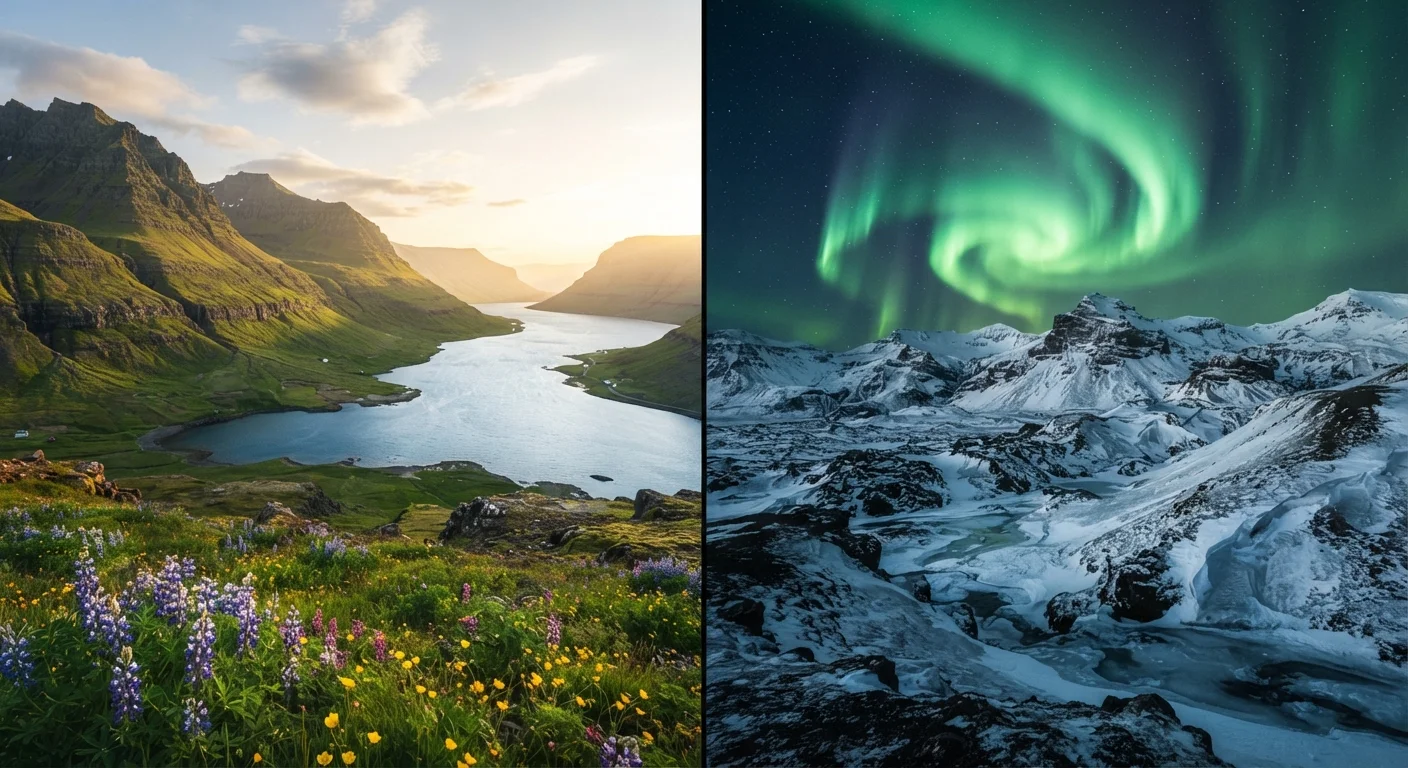
Iceland in Winter
The dramatic, aurora-chasing cold-weather adventure.
Best for: Travelers who want northern lights, snow-blanketed landscapes, and fewer crowds at major sites.
Option B
Iceland in Summer
The vivid, endlessly bright land of midnight sun and open roads.
Best for: Travelers who want 24-hour daylight, accessible hiking, wildlife encounters, and easier logistics.
If you want to witness the northern lights
Iceland in Winter
The aurora borealis requires long, dark nights — Iceland's winters from October through March provide exactly that. Clear skies are never guaranteed, but your window of opportunity is widest in winter.
If you plan to hike or drive Iceland's Ring Road fully
Iceland in Summer
Highland roads like the F-roads only open in summer, and 24-hour daylight means you can explore on your own schedule without racing the sunset.
If you're traveling on a tighter budget
Iceland in Winter
Winter sits outside peak season, meaning accommodation and tours often carry lower price tags than summer's peak rates — though this varies by provider.
If you're traveling with children or first-time international visitors
Iceland in Summer
Milder temperatures, safer road conditions, and longer activity windows make summer more forgiving for groups with varied comfort levels.
If seeing puffins and other wildlife is a priority
Iceland in Summer
Puffins migrate to Iceland's coasts between April and August, and whale-watching tours run more reliably in calmer summer seas.
Light, Darkness, and What That Actually Means for Your Trip
Nothing shapes an Iceland trip more fundamentally than daylight. In summer — roughly June through August — Iceland experiences the midnight sun, with some areas seeing nearly 24 continuous hours of light around the June solstice. That means you can hike a glacier at 11 p.m. or photograph waterfalls in golden-hour light that never quite disappears. It's genuinely surreal, and deeply energizing for most visitors.
Winter flips the script entirely. By December, Reykjavik sees as few as four to five hours of daylight. That limited light window concentrates activity into a tight midday stretch — and after dark, the stage belongs to the aurora borealis. Northern lights sightings are never guaranteed (they require clear skies and active solar conditions), but Iceland's latitude and dark winters make it one of the more accessible places in the world to chase them.
For travelers who struggle with disrupted sleep, note that summer's endless brightness can interfere with rest — most accommodations offer blackout curtains, but it's worth confirming before booking.
| Criterion | Iceland in Winter | Iceland in Summer |
|---|---|---|
| Daylight hours | 4–6 hours (December) | Up to 24 hours (June) |
| Northern lights visibility | Possible (dark skies needed) | Not visible |
| Midnight sun | Not available | June–August |
| Highland F-roads | Closed | Open late June–September |
| Ice cave tours | Seasonally available | Not available |
| Crowd levels | Lower (except holidays) | Peak season crowds |
| Typical accommodation cost | Generally lower | Generally higher |
| Wildlife (puffins, whales) | Limited | Widely available |
| Average coastal temp (Reykjavik) | Around 32–37°F (0–3°C) | Around 50–59°F (10–15°C) |
Access, Roads, and What You Can Actually Do
Iceland's Highland Interior — home to some of the most dramatic volcanic landscapes on Earth — is only accessible in summer, typically from late June through September. The famous F-roads (unpaved mountain tracks) require four-wheel-drive vehicles and are legally closed in winter. If exploring the remote Landmannalaugar lava fields or the Kjölur route is on your list, summer is your only option.
Winter brings its own compensations: ice cave tours inside Vatnajökull glacier run seasonally from roughly November through March, when freezing temperatures keep the ice stable enough for safe exploration. Snowmobile excursions, dog sledding, and glacier walks on packed snow are winter-specific experiences you simply can't replicate in warmer months.
Road conditions anywhere in Iceland can change quickly. The Icelandic Road and Coastal Administration (Vegagerðin) maintains a real-time road conditions website that travelers should check daily — this applies in both seasons but is especially critical in winter when mountain roads may close with little notice. Always verify current conditions and entry requirements through official sources before your trip.
~2M
Annual tourists visiting Iceland
Iceland's tourism board has tracked dramatic visitor growth over the past decade, with the majority of arrivals concentrated in the summer months.
4–5 hrs
Daylight in Reykjavik in December
Iceland's capital sits just south of the Arctic Circle, giving it some of Europe's most extreme seasonal light variation.
~200
Volcanoes on the island
Iceland sits on the Mid-Atlantic Ridge, making it one of the most volcanically active places on Earth — a landscape feature dramatic in any season.
Crowds, Costs, and the Planning Reality
Summer is unambiguously Iceland's peak tourist season. Visitor numbers swell dramatically from June through August, and popular sites like Geysir, Gullfoss, and the Blue Lagoon get very busy. Accommodation books out months in advance, and prices reflect the demand. That said, summer also offers the widest range of tour options, the most flexible logistics, and the highest chance of navigable roads.
Winter, by contrast, is comparatively quieter — especially outside the Christmas and New Year window. If the idea of having a waterfall largely to yourself appeals, the shoulder months of November or February can deliver that. For a broader look at how timing shapes cost and experience across destinations, see our piece on peak season vs. off-season travel.
It's also worth understanding that Iceland is an expensive destination in any season — budget planning should account for fuel, accommodation, and guided tours regardless of when you go. The off-season advantages are real but relative; they won't transform Iceland into a budget destination. For more on what off-season travel genuinely delivers, the overlooked advantages of off-season travel is worth a read before you commit to dates.
Weather, Packing, and the One Constant
Here's the honest truth: Icelandic weather is unpredictable in every season. The local saying — "if you don't like the weather, wait five minutes" — exists for a reason. Summer temperatures in Reykjavik typically range from the mid-40s°F to low 60s°F (roughly 7–16°C). Winter temperatures hover around freezing on the coast, though wind chill makes it feel considerably colder, and inland or highland areas drop much further.
In both seasons, the packing philosophy is the same: waterproof layers. A windproof and waterproof outer shell, moisture-wicking base layers, and sturdy footwear are non-negotiable. Summer hikers should add sun protection; winter travelers need insulated gloves, a hat, and ice cleats (often called crampons) for walking on icy surfaces — these can be rented locally.
Neither season is definitively "better" — they're different Iceland experiences tailored to different traveler priorities. The most important step is being honest with yourself about what you most want from the trip, then planning accordingly.
Always Check Official Sources Before You Go
Entry requirements, road conditions, and site access in Iceland can change with weather, volcanic activity, or policy updates. Before traveling, verify current information through the Icelandic Tourist Board (visiticeland.com), the Icelandic Road and Coastal Administration (road.is), and your government's official travel advisory. This article provides general guidance and is not a substitute for up-to-date official information.