

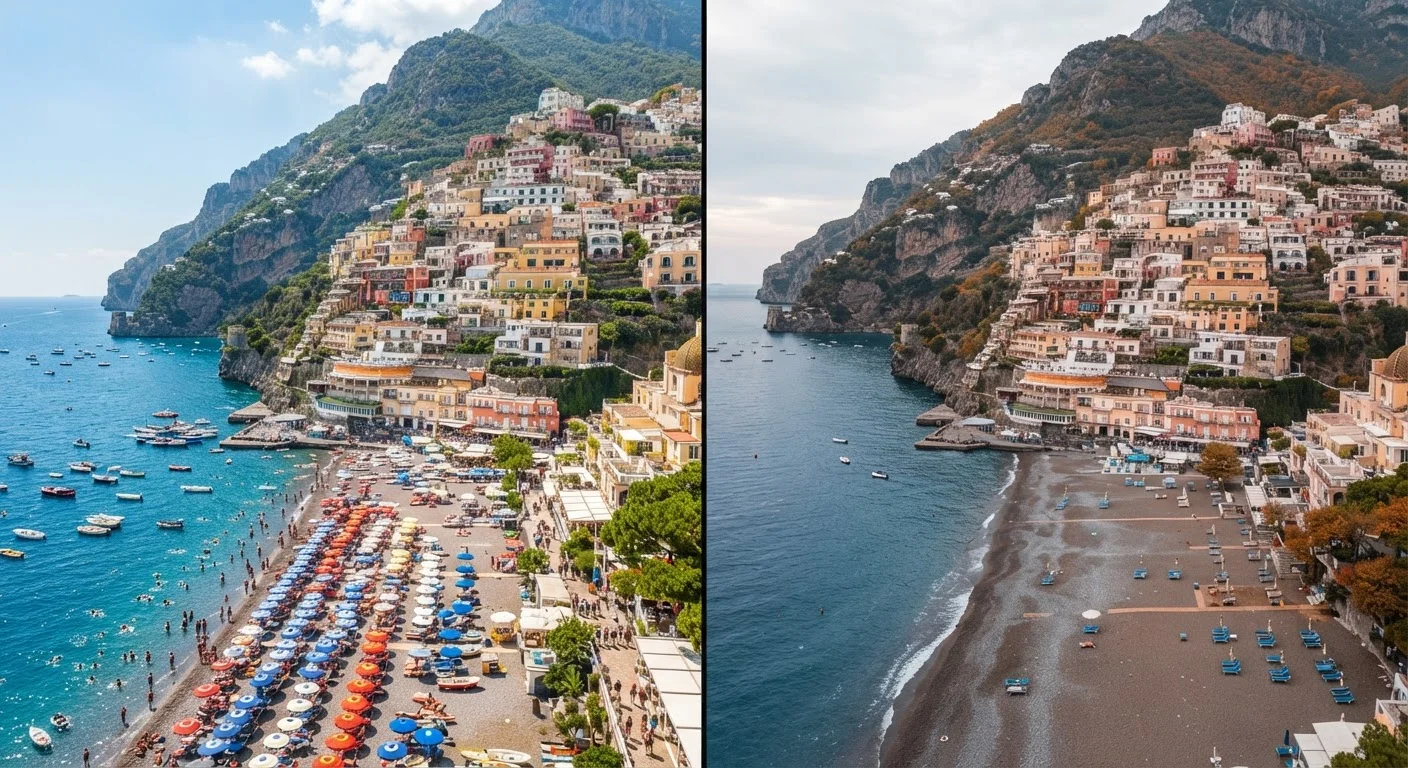
Key Takeaways
Our Verdict
Neither peak nor off-season travel is universally superior—it comes down to what you value most. Peak season delivers reliability and vibrancy at a premium; off-season rewards flexibility with savings and solitude. For many travelers, shoulder season threads the needle between the two.
| Best for | Recommended |
|---|---|
| Families with school-age children or fixed vacation schedules | Peak Season |
| Budget-conscious travelers with flexible dates | Off-Season |
| Those seeking fewer crowds without sacrificing core amenities | Shoulder Season |
| First-time visitors to an iconic destination | Shoulder Season |
What Peak and Off-Season Actually Mean
Travel seasons aren't set by a universal calendar—they're shaped by demand. Peak season is simply when a destination attracts the most visitors, typically aligned with favorable weather, major holidays, or school breaks. Off-season is the inverse: when visitor numbers drop, often because of weather extremes, local closures, or competing events elsewhere.
These labels shift dramatically depending on where you're going. Hawaii's peak runs through winter as mainland Americans chase warmth, while a mountain ski resort peaks in January and goes quiet in June. A Caribbean island may see its busiest season during North American winter—and its lowest prices during hurricane season. Understanding a destination's specific rhythm is the essential first step. Our guide on what shoulder season actually means breaks down how to pinpoint the real off-peak window for any location.
Peak Season: The Case For and Against
Peak season travel has earned its premium for legitimate reasons. Weather tends to be at its most predictable and pleasant, nearly all attractions and restaurants operate at full capacity, and there's an undeniable energy to a destination in full swing. Families with school-age children often have little choice—summer and holiday breaks align directly with peak periods.
The trade-offs, however, are real. Flights and accommodations cost significantly more, popular sites can feel overcrowded, and booking windows often need to open months in advance. Spontaneity is expensive. Locking in rates early becomes almost mandatory during peak periods—last-minute options thin out fast.
Make Crowds Work in Your Favor
If peak season is your only window, consider traveling mid-week and arriving at popular attractions early in the morning. These small adjustments can meaningfully reduce crowd density even at the height of summer. Booking accommodations slightly outside the tourist core can also lower costs while keeping you close to everything.
If peak season is your only window, consider traveling mid-week and arriving at popular attractions early in the morning. These small adjustments can meaningfully reduce crowd density even at the height of summer.
Off-Season: Savings, Solitude, and Some Trade-Offs
Off-season travel rewards the flexible traveler with lower prices across flights, hotels, and even tours. Iconic landmarks become genuinely navigable without elbow-to-elbow crowds, and locals often have more time and warmth to share when their town isn't at capacity. The atmosphere can feel more authentic.
The honest trade-offs: weather may be unpredictable or genuinely challenging, some businesses operate on reduced hours or close entirely, and certain experiences—sunset boat tours, rooftop bars, seasonal festivals—simply don't exist off-peak. For a fuller picture, see the overlooked advantages of off-season travel, which covers both the genuine wins and the limitations worth knowing before you book.
Research Closures Before Booking Off-Season
Some destinations—particularly smaller beach towns, alpine resorts, or island communities—reduce operating hours or close key amenities entirely during off-peak months. Before booking, verify which restaurants, tours, and attractions will actually be open during your travel window. A quick check of local tourism bureau websites or destination travel forums can save a frustrating surprise on arrival.
How the Two Seasons Compare Side by Side
Choosing between peak and off-season ultimately comes down to weighing several concrete factors. The comparison below maps the key differences to help you evaluate what matters most for your specific trip.
| Peak Season | Off-Season | |
|---|---|---|
| Flight & Hotel Prices | Typically highest of the year | Often 20–50% lower |
| Crowd Levels | High — expect queues and wait times | Low — more space and access |
| Weather Reliability | Generally most favorable | Variable; extremes more likely |
| Attraction & Business Hours | Full capacity, extended hours | Reduced or seasonal closures possible |
| Booking Lead Time Needed | Months in advance | Shorter; more last-minute availability |
| Atmosphere & Energy | Vibrant, festive, busy | Quieter, more local, exploratory |
These differences don't exist in isolation—they interact. High season's crowds can undercut even perfect weather, while off-season's savings may be offset if a destination's signature experience isn't available. Smarter planning means weighing all these variables together, not just price. Our broader guide on why travel plans fall apart addresses how timing missteps contribute to disappointing trips.
Matching Your Travel Style to the Right Season
Your ideal travel window depends more on your priorities than on any single metric. Consider these profiles:
- The Experience Maximizer: You want every restaurant open, every tour available, beaches at their most swimmable. Peak season is likely worth the cost and crowds.
- The Budget Traveler: If stretching your dollar means more nights away or a better room, off-season flexibility is your friend—especially if you're open to visiting beach destinations in choosing between coastlines based on when each is most accessible affordably.
- The Crowd-Averse Explorer: Shoulder season is almost always your answer—close enough to peak that amenities are open, but visitor volume noticeably lower.
- The Group Planner: Coordinating schedules across a group often locks you into peak times by default. Group travel trade-offs are worth understanding before you commit to a window that may not suit everyone.
20–50%
Typical hotel savings in off-season
According to general industry analysis, travelers can see hotel rate reductions of this range during low-demand periods compared to peak weeks at the same property.
3–6 months
Recommended advance booking for peak season
Travel industry guidance commonly suggests booking popular destinations three to six months ahead during high season to secure preferred accommodations and fares.