

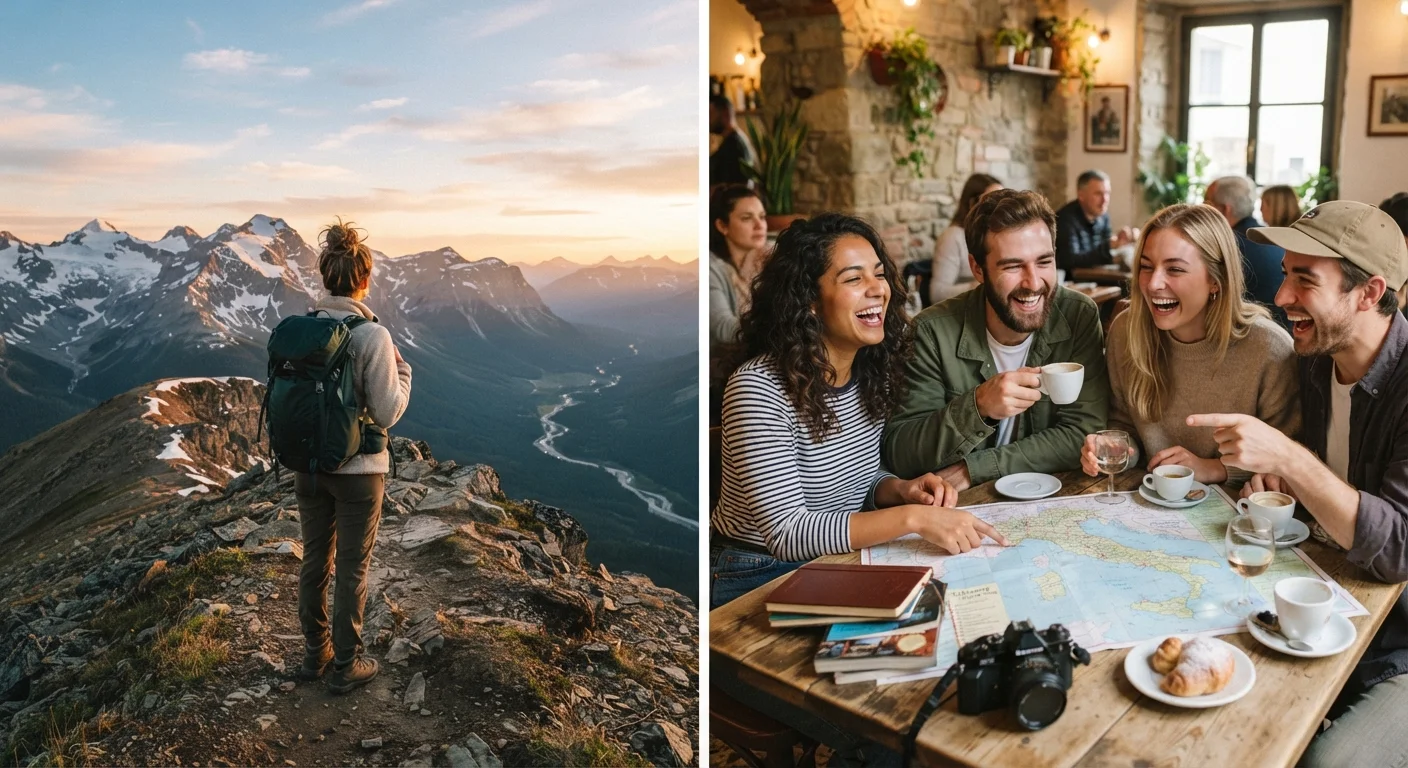
Key Takeaways
Shared costs make expensive destinations more accessible
Accommodation, private transport, and tour costs divide evenly across travelers, often cutting per-person spend significantly compared to going alone.
Built-in safety and mutual support
Groups provide a natural layer of security — someone always knows where you are, and medical or logistical emergencies are easier to manage with others present.
Richer shared memories and spontaneous fun
Experiences — whether a scenic hike or a chaotic market visit — tend to feel more vivid and memorable when shared with people you care about.
Easier to tackle complex itineraries
Multi-destination trips involving multiple forms of transport, language barriers, or unfamiliar customs can feel far more manageable with a group problem-solving together.
Itinerary compromise reduces personal freedom
Every group decision requires consensus, which means someone usually sacrifices their preferred activity, pace, or budget level on any given day.
Group dynamics can escalate into conflict
Differing sleep schedules, spending habits, and energy levels create friction — even among close friends — over a trip of more than a few days.
Solo travelers pay a consistent price premium
Single-occupancy hotel surcharges, solo tour supplements, and the inability to split transport costs mean solo travel routinely costs 20–50% more per night than group rates.
Isolation can affect wellbeing on longer trips
Extended solo travel can lead to loneliness, particularly in destinations where language barriers limit casual social interaction or when plans go sideways.
Our Verdict
Neither group travel nor solo travel is objectively better — each genuinely excels in different situations. Groups make expensive destinations more affordable and social experiences richer, while solo travel rewards spontaneity and self-reliance in ways that shared itineraries rarely can. The honest answer is that most seasoned travelers do both, depending on the trip.
Solo travel suits independent, flexible personalities heading to well-traveled destinations; group trips work best for cost-sharing on bigger journeys or travelers who value shared experiences over personal freedom.
The Core Trade-Off: Freedom vs. Shared Experience
At the heart of this decision is a single tension: how much freedom are you willing to trade for company — and vice versa? Group trips pool enthusiasm, cost, and logistics. Solo travel hands you complete ownership of every choice, from when you wake up to when you leave a city behind.
Neither is a compromise — they're genuinely different kinds of travel. Understanding what you're actually giving up (and gaining) in each scenario helps you stop second-guessing your approach and start planning with confidence. For a deeper look at how planning style affects outcomes, see our guide to why travel plans fall apart.
Shared costs make expensive destinations more accessible
Accommodation, private transport, and tour costs divide evenly across travelers, often cutting per-person spend significantly compared to going alone.
Built-in safety and mutual support
Groups provide a natural layer of security — someone always knows where you are, and medical or logistical emergencies are easier to manage with others present.
Richer shared memories and spontaneous fun
Experiences — whether a scenic hike or a chaotic market visit — tend to feel more vivid and memorable when shared with people you care about.
Easier to tackle complex itineraries
Multi-destination trips involving multiple forms of transport, language barriers, or unfamiliar customs can feel far more manageable with a group problem-solving together.
Where Group Travel Has a Real Edge
The financial case for group travel is straightforward: split costs change the math dramatically. A beach house that costs $300 a night becomes $60 per person in a group of five. Rental cars, private tours, and airport transfers all follow the same logic. Road trips vs. flying is a decision that also shifts significantly when group size enters the equation.
Beyond cost, there's the experiential dimension. Shared meals, spontaneous laughs, and having someone to watch your bag while you use a restroom in a busy train station — these aren't trivial. Group dynamics also provide a natural safety buffer, particularly in unfamiliar destinations or overnight travel situations.
72%
Solo travelers who report greater self-confidence after a solo trip
According to a survey published by the Solo Travel Society, the majority of solo travelers cite personal growth and confidence as a primary benefit.
30–50%
Typical per-person savings on accommodation in a group of four
Travel industry analyses consistently show that splitting vacation rentals or multi-bed hotel rooms delivers substantial per-person savings versus solo bookings.
Where Solo Travel Quietly Wins
Solo travel's greatest gift is pace. You leave when you're ready, linger where you're curious, and pivot without negotiation. That freedom is genuinely transformative — many travelers report that going solo forced them to engage with destinations and locals in ways that a group itinerary never would have allowed.
The social paradox of solo travel is also worth noting: you often meet more people alone than you do in a group. Groups create a self-contained social bubble; solo travelers are more approachable and more likely to seek connection. If you're considering your first solo domestic trip, our practical starting point for first-time solo travelers in America covers the planning basics in detail.
Itinerary compromise reduces personal freedom
Every group decision requires consensus, which means someone usually sacrifices their preferred activity, pace, or budget level on any given day.
Group dynamics can escalate into conflict
Differing sleep schedules, spending habits, and energy levels create friction — even among close friends — over a trip of more than a few days.
Solo travelers pay a consistent price premium
Single-occupancy hotel surcharges, solo tour supplements, and the inability to split transport costs mean solo travel routinely costs 20–50% more per night than group rates.
Isolation can affect wellbeing on longer trips
Extended solo travel can lead to loneliness, particularly in destinations where language barriers limit casual social interaction or when plans go sideways.
The Hidden Friction Points Worth Knowing
Group trips can fracture over two things faster than anything else: money and pacing. Disagreements about how much to spend at dinner, whether to do an optional excursion, or when to leave for the airport create real tension. These aren't signs of bad friends — they're the predictable friction of merging different travel personalities under one itinerary.
Solo travel has its own friction: single-occupancy rates. Many hotels charge solo travelers the same as a couple, meaning you absorb 100% of the room cost. The off-season travel advantage can partially offset this — lower base rates shrink the solo surcharge gap. And for complex international itineraries, see how planning abroad differs from domestic travel regardless of group size.
Health and Accessibility Considerations
Travel style can also be shaped by health needs, mobility considerations, or chronic conditions — factors that affect both pace and safety planning in different ways for solo versus group travel. Group trips may offer reassurance for travelers managing health concerns, while solo trips require more independent preparation. Our guide to planning trips around health needs offers general guidance — always consult your healthcare provider before traveling with medical considerations.