

Key Takeaways
Our Verdict
Neither coastline is objectively superior — they serve genuinely different travel styles. The Gulf Coast rewards those craving tranquility, warm water, and soft sand, while the Atlantic Coast suits travelers who want surf, variety, and a mix of beach and boardwalk culture. Match the coast to your trip goals and you're unlikely to go wrong.
| Best for | Recommended |
|---|---|
| Families with young children and casual swimmers | Gulf Coast |
| Surfers and water sports enthusiasts | Atlantic Coast |
| Shelling, snorkeling, and nature-focused travelers | Gulf Coast |
| Travelers wanting diverse destinations along one route | Atlantic Coast |
Water Conditions: Calm vs. Dynamic
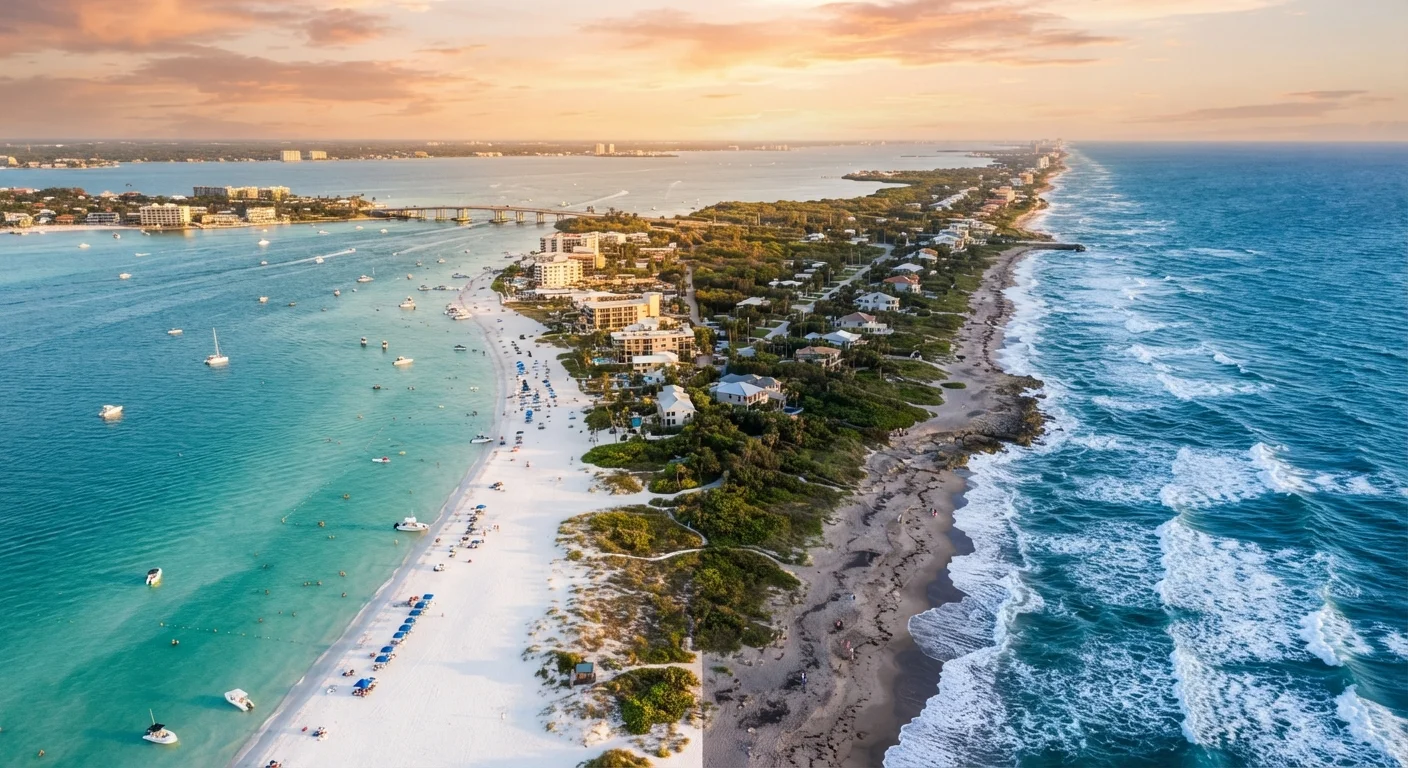
The single biggest practical difference between these two coastlines is what the water actually feels like when you step in. The Gulf of Mexico is a semi-enclosed sea, which means its waters are typically warmer, calmer, and shallower than the open Atlantic. Gulf water temperatures along Florida and Alabama beaches often reach into the low-to-mid 80s°F in summer. Wave action is minimal — more of a gentle lap than a true surf.
The Atlantic, by contrast, is fed by open-ocean currents including the Gulf Stream, which runs close to the Florida coast before swinging northeast. Depending on the stretch you visit — from the Outer Banks of North Carolina to the beaches of Cape Cod — water temperatures and wave intensity can vary considerably. Surfers gravitate to spots along the Mid-Atlantic and New England Atlantic coast precisely because of that reliable wave energy.
For families with small children or those who simply prefer wading and floating over battling currents, the Gulf's predictable gentleness is a real advantage. Those chasing a more dynamic ocean experience will find the Atlantic more rewarding.
Sand, Scenery, and Shoreline Character
The Gulf Coast, particularly the stretch running through the Florida Panhandle and coastal Alabama, is famous for its fine, powdery white quartz sand — the kind that stays cooler underfoot even on a hot summer day. The terrain tends to be flat and wide, with shallow sandbars extending far offshore.
The Atlantic Coast offers considerably more geographic variety. You'll encounter barrier islands, tidal inlets, sea grass marshes, dramatic dunes, and rocky outcroppings as you move up from Florida toward the Carolinas, Virginia, and New England. Beachcombers and nature lovers will find the Atlantic coastline's ecological diversity genuinely remarkable — and shelling opportunities along the Gulf's southwestern Florida coast (think Sanibel Island) are also hard to beat.
| Gulf Coast | Atlantic Coast | |
|---|---|---|
| Water temperature (summer) | Low-to-mid 80s°F typical | Varies: 70s–80s°F south; cooler north |
| Wave intensity | Calm, gentle lapping | Moderate to strong, surf-friendly |
| Sand character | Fine white quartz, stays cool | Varies: fine to coarser, golden to tan |
| Shoreline variety | Relatively uniform, flat beaches | High variety: dunes, marshes, rocky areas |
| Best for families | Excellent — shallow, calm water | Good — depends on specific location |
| Hurricane risk | Significant, rapid intensification possible | Significant, especially Carolinas northward |
| Warm-weather season length | Long — spring through fall | Shorter in north; longer in Carolinas/Georgia |
If coastal scenery and natural diversity rank high on your priorities, think about what specific landscape draws you. The Pacific Northwest coast offers yet another contrast for those with a more adventurous outlook.
Weather, Seasons, and Timing
Both coastlines share one major weather consideration: hurricane season, which officially runs from June through November. The Gulf Coast — particularly the western Florida coast and the areas around the Florida Panhandle — can be directly in the path of storms that develop in the Gulf of Mexico, which can intensify rapidly due to warm, shallow water. The Atlantic Coast is not immune either; hurricanes and tropical storms regularly threaten areas from the Carolinas northward.
Check Official Advisories Before You Book
Hurricane season timelines and severity vary year to year. Before booking a coastal trip between June and November, consult the National Hurricane Center (nhc.noaa.gov) and your destination's local emergency management resources for current conditions. Travel insurance that covers weather-related cancellations is worth evaluating for trips during this window.
Outside of hurricane season, the Gulf Coast enjoys a longer window of warm, swimmable weather. The Atlantic Coast's northern stretches have a shorter prime season — New England beaches are genuinely lovely in late summer but can feel brisk by September. The Carolinas and Georgia offer a longer shoulder season with milder temperatures that appeal to spring and fall travelers.
Timing is worth thinking through carefully. Our guide on peak season vs. off-season travel walks through how seasonal timing affects cost, crowds, and experience — useful regardless of which coast you choose. And if avoiding peak pricing is a priority, off-season travel has real advantages on both coasts worth exploring.
Activities and Traveler Profiles
Matching the coast to your actual plans makes a meaningful difference. Here's how different traveler types tend to line up:
- Families with young kids: The Gulf's calm, warm, shallow water is hard to beat for stress-free beach days.
- Surfers and paddleboarders: The Atlantic, particularly the Outer Banks, Ocean City, and Cape Hatteras areas, provides more consistent swells.
- Snorkelers and marine life enthusiasts: South Florida's Atlantic coast near the Florida Keys (technically Gulf-adjacent) and areas like John Pennekamp offer reef access, though the Gulf's clear, shallow bays also support excellent marine observation.
- Road trippers covering multiple stops: The Atlantic Coast's length and density of distinct cities — Savannah, Charleston, Wilmington, Virginia Beach, Ocean City, the Jersey Shore, Cape Cod — makes it particularly rewarding for multi-destination trips. See our framework for road trips vs. flying if you're still mapping out logistics.
- Nature and wildlife watchers: Both coasts have exceptional options, from Gulf Coast birding hotspots to Atlantic Coast national seashores.
Whatever coast you land on, thoughtful trip planning will make the difference between a good trip and a great one.