

Key Takeaways
Why Carry-On Only Works for Two Weeks
The idea of fitting two weeks into a carry-on sounds like a packing puzzle reserved for ultralight enthusiasts. It's not. Experienced travelers do it routinely — the key is a mindset shift from packing for every scenario to packing for the actual trip. The payoffs are immediate: no checked baggage fees, no waiting at carousels, no risk of an airline losing your bag, and the freedom to move through airports and cities without hauling a rolling tower.
If you're concerned about overpacking habits in general, why travelers regret overpacking is worth reading before you start your list. And once your bag is sorted, run through the complete pre-departure checklist to make sure nothing else slips through the cracks.
What you will need
The system below is built around seven practical steps. Follow them in order and you'll arrive at a bag that's genuinely manageable — and a trip that starts the moment you land, not after an hour at baggage claim.
What You'll Need
The right gear makes the technique work. You don't need an expensive specialist bag — just one that fits within airline limits and is structurally firm enough to hold its shape in an overhead bin.
Carry-On Bag (compliant dimensions)
The foundation of the system — must meet your airline's size limits, typically around 22 x 14 x 9 inches for US carriers.
Packing Cubes (set of 3–4)
Compress and organize clothing by category, making it easier to locate items without unpacking everything.
Quart-Sized Clear Toiletry Bag
Required by TSA for carrying liquids through US airport security checkpoints.
Travel Laundry Detergent Sheets
Lightweight, flat, and TSA-friendly — allows sink washing of clothes mid-trip.
Compression Packing Cubes
Remove excess air from bulkier items like fleeces or jeans to reclaim significant space.
Packing List (written or digital)
Prevents impulse over-packing by holding you accountable to a pre-planned wardrobe.
Check Your Airline's Carry-On Size Policy
Carry-on size limits are not universal. Budget and international carriers often enforce stricter dimensions and weight caps than major US airlines. Always verify the specific policy for every airline on your itinerary — including connecting flights on partner carriers — before you pack. Arriving at the gate with an oversized bag can result in forced gate-checking fees that rival the cost of a checked bag.
For a deeper dive into what you can and can't bring through security, including medications and electronics, see the complete carry-on liquids and electronics guide. It's worth reviewing before you finalize your toiletry kit.
Step-by-Step Packing Instructions
Work through these steps in sequence. The earlier steps inform the later ones — especially the wardrobe selection, which determines how well everything else falls into place.
Confirm your bag dimensions before anything else
Measure your carry-on against the stated limits for each airline you'll fly. US domestic carriers typically allow bags up to 22 x 14 x 9 inches, but international and budget carriers may be considerably smaller. Soft-sided bags offer a small flexibility advantage at gate checks. If your bag is borderline, test it against an airport sizing bin before your trip — not during boarding.
Build a neutral, mix-and-match wardrobe
Lay out every item you're considering, then cut the list by a third. Aim for a palette of 2–3 coordinating colors so every piece works with every other piece. A functional two-week carry-on wardrobe typically includes: 5 tops, 2 bottoms, 1 dress or versatile layer, 3 pairs of underwear and socks (refreshed by laundry), 1 pair of walking shoes, and 1 pair of sandals or dress shoes. Merino wool and synthetic-blend fabrics resist odor, dry fast, and pack small — worth prioritizing over cotton.
Wear your bulkiest items on travel days
Your heaviest shoes, thickest jacket, and any chunky accessories should be on your body during flights, not inside the bag. This single habit reclaims more bag space than any packing technique. If you're flying to a warm destination, wear a jacket through the airport and stow it in the overhead bin or under the seat once you board.
Roll clothes and load packing cubes by category
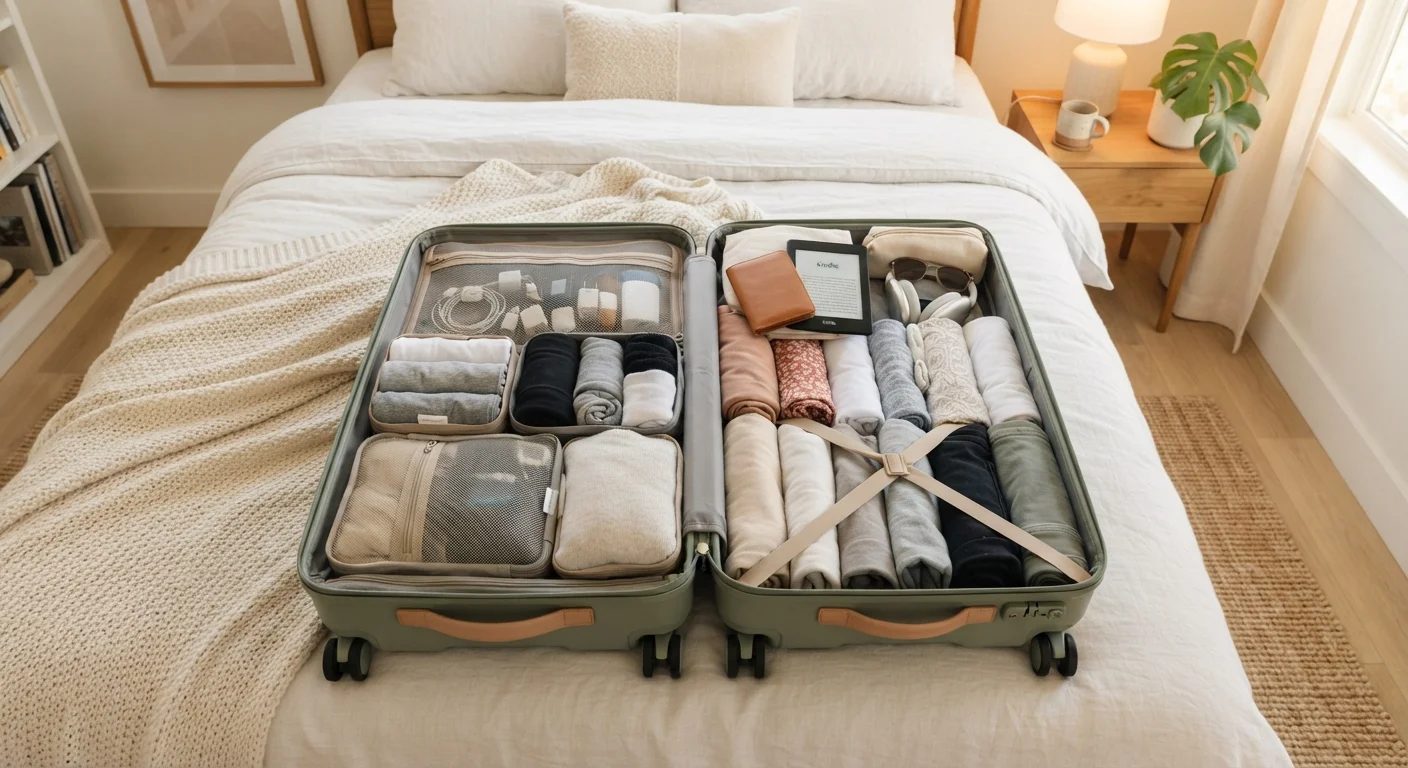
Rolling — rather than folding — clothes reduces wrinkles and uses space more efficiently, especially for soft fabrics. Place rolled items vertically in packing cubes so you can see everything at a glance without disturbing the stack. Use separate cubes for tops, bottoms, and underlayers. Heavier items (jeans, shoes) go near the wheels; lighter items toward the top. Stuff socks inside shoes to use every inch.
Streamline your toiletries ruthlessly
Toiletries are where most packers lose the most space and cause the most TSA friction. Decant products into reusable travel-size containers (3.4 oz / 100 ml or smaller). Choose solid alternatives where possible: shampoo bars, solid conditioner, and stick sunscreen eliminate liquid concerns entirely. Many destinations have pharmacies or convenience stores where you can replace or supplement basics — you don't need a 14-day supply of everything.
[warning_callout]Plan your mid-trip laundry session
Identify roughly when and where you'll do laundry — hotel laundry service, a laundromat, or a sink wash. Once you know laundry is planned, packing 3–4 days of underwear and socks instead of 14 becomes the rational choice. Lightweight fabrics like merino and synthetics wash and dry overnight. Pack a small mesh bag for dirty clothes — it keeps them separate and doubles as your laundry bag.
[tip_callout]Do a final weight and fit check
Lift your packed bag and simulate overhead bin movement — raise it to shoulder height with one arm. If that's a struggle, you'll be miserable in transit. A bathroom scale gives you an accurate weight reading. Most US carriers allow carry-ons up to 40–50 lbs, but your own endurance is the practical limit for a two-week trip. Remove anything you haven't mentally used in your itinerary planning.
Once you've packed using this method, confirm the rest of your pre-trip logistics are covered. Overlooked logistics experienced travelers confirm in advance is a useful companion read — especially if this is a longer international trip where transit times and check-in windows can catch you off guard. You can also use this as part of your broader trip planning process.