

Travel & Leisure

The Complete American Traveler's Pre-Departure Checklist

Share
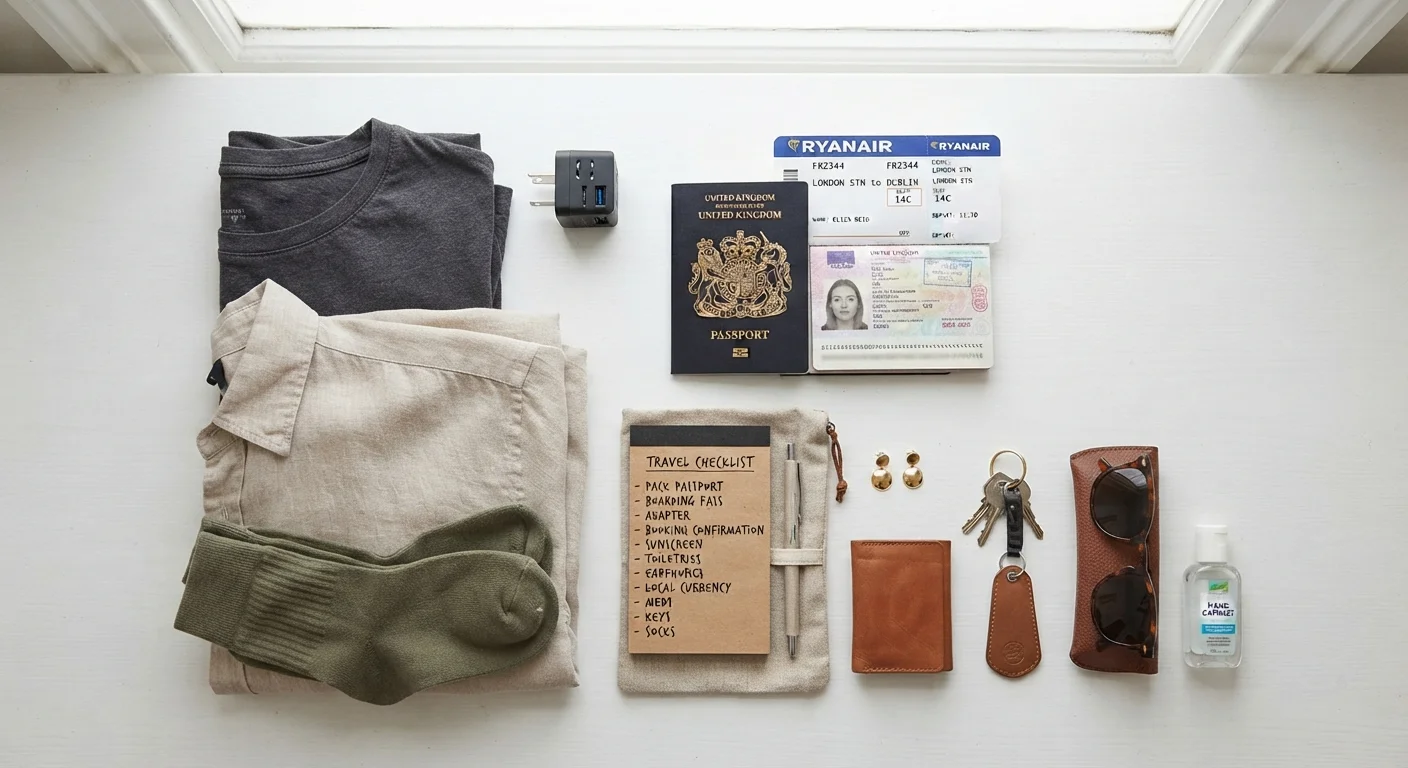
Flat lay of travel essentials including passport, boarding pass, packing list, and travel accessories.

Key Takeaways

Start your pre-departure checklist at least two weeks before departure, not the night before.
Documents and finances are the highest-stakes items — address these first.
Notifying your bank and setting up home security before you leave prevents costly surprises.
Health preparation, including vaccinations and prescriptions, often requires advance planning.
A packed carry-on with essentials protects you if checked luggage is delayed.
45–120 min

Summary

28 items · 45 minutes – 2 hours

Why a Pre-Departure Checklist Changes Everything

Most travel stress doesn't happen at the airport — it happens in the days before departure when overlooked tasks pile up. A structured pre-departure checklist transforms that chaos into a confident, methodical process, whether you're heading to a neighboring state or crossing an international border for the first time.

This checklist covers five core categories: documents, finances, packing, home security, and health. Work through each group systematically, ideally starting two weeks out. If you're planning your very first trip abroad, our first-time international travel guide provides additional context on passports, customs, and currency to complement this checklist.

Documents & Identity

Verify your passport is valid for at least six months beyond your return date — many countries enforce this requirement at entry. Must
Research and secure any required visas for your destination well in advance; processing times vary widely by country. Must
Make two photocopies of your passport, visa, and driver's license — leave one at home with a trusted contact and pack one separately from the originals. Must
Confirm that your flight and hotel confirmation numbers are accessible offline (screenshot or printed copy). Must
Check entry requirements and travel advisories on the official U.S. State Department website before departure. Must

Finances & Banking

Notify your bank and credit card providers of your travel dates and destinations to prevent fraud alerts from freezing your cards. Must
Identify which of your cards charge foreign transaction fees and plan to use a fee-free card for international purchases. Should
Carry a small amount of local currency for your destination, particularly for tips, taxis, or markets that don't accept cards. Should
Store emergency cash and a backup payment card separately from your primary wallet. Must
Review your travel insurance coverage — or consider purchasing a policy — to understand what medical, cancellation, and baggage protections apply. Should

Packing Essentials

Pack a carry-on bag with one day's change of clothes, medications, chargers, and valuables in case your checked luggage is delayed. Must
Confirm your power adapter is compatible with your destination's outlet types and voltage standards. Should
Follow TSA liquid rules — all liquids in carry-on bags must be 3.4 oz or less and fit in a single quart-sized clear bag. Must
Weigh your checked luggage before leaving home to avoid airline overweight fees at check-in. Nice to have
Take photos of your packed bags before closing them — useful documentation in the event of a lost luggage claim. Nice to have

Home Security & Logistics

Arrange for mail and package delivery to be held or collected — a full mailbox signals an empty home. Must
Pause or redirect any scheduled deliveries and notify trusted neighbors of your absence. Should
Set smart home devices or light timers to maintain activity patterns inside your home. Nice to have
Unplug non-essential electronics to reduce fire risk and phantom power draw while you're away. Should
Leave a spare key and your contact information with a trusted friend or family member. Must

Health Preparation

Consult your healthcare provider at least 4–6 weeks before international travel to discuss destination-specific vaccinations or preventive medications. Must
Ensure you have enough prescription medication to last the entire trip, plus several days extra in case of delays. Must
Pack medications in their original labeled containers and carry a copy of the prescription for international travel. Must
Review what your health insurance covers abroad and understand how to access emergency medical care at your destination. Should
Pack a basic travel health kit: pain relievers, antidiarrheal medication, bandages, hand sanitizer, and any personal health items. Should
If traveling to regions with specific disease risks (e.g., malaria, yellow fever), discuss prophylaxis and prevention strategies with your doctor. Should
Add the local emergency services number and nearest hospital address for your destination to your phone contacts. Nice to have

Tools You'll Want on Hand

Having the right resources at your fingertips makes working through this checklist faster and more thorough. Below are the tools most travelers find genuinely useful during the pre-departure process.

Required

U.S. State Department Website (travel.state.gov)

Check official travel advisories, passport requirements, and visa information for any destination.

Required

CDC Travelers' Health Portal

Look up destination-specific vaccine recommendations and health alerts before consulting your doctor.

Optional

Packing list app or spreadsheet

Track what you've packed and what still needs to be added to avoid last-minute scrambles.

Optional

Digital document storage app

Store secure, encrypted copies of your passport, visa, and insurance documents accessible offline.

Optional

Luggage scale

Weigh your bag at home to avoid overweight fees at airline check-in counters.

For guidance on what you can and can't bring through airport security — including rules around liquids, electronics, and medications — see our complete carry-on guide. TSA rules have more nuance than most travelers realize, and getting it wrong can slow you down at the checkpoint.

Critical Reminders Before You Zip That Bag

Even meticulous planners get caught out by a handful of commonly missed items. Pay special attention to your home setup and your health documentation — these are the areas travelers most often wish they'd handled earlier.

Passport Validity Is Non-Negotiable

Many countries require your passport to be valid for at least six months beyond your planned return date — not just your departure date. Airlines may deny boarding if this requirement isn't met, and customs officials abroad can refuse entry. Check your passport's expiration date the moment you book a trip, and allow 8–11 weeks for standard U.S. passport renewal, longer during peak seasons.

If you're managing a medical condition or traveling with prescription medications, give yourself extra runway. Consult your healthcare provider well before departure to discuss destination-specific health risks, required vaccinations, and adequate medication supplies. Our article on traveling with health needs offers practical, general guidance on factoring medical considerations into your plans.

Don't Leave Health Prep to the Last Minute

Some travel vaccinations require multiple doses spread over several weeks to become fully effective. Antimalarial medications may also need to be started days before departure. Waiting until the week before your trip can leave you unprotected. Schedule a travel health consultation with your healthcare provider as soon as your itinerary is confirmed — general information is also available through the CDC Travelers' Health portal, though it does not replace personalized medical advice.

For a deep dive into the easy-to-forget items that even seasoned travelers overlook — travel notifications, home security, medication quantities — explore our complementary pre-travel checklist for overlooked stuff. And for broader travel hacks that make any trip smoother, browse our Travel Tips & Hacks hub.

Travel & Leisure Editorial Team is the collective byline for our editorial team and contributor network. Articles published under this byline or an editorial pen name are researched, written, and reviewed according to our editorial standards for clarity, consistency, and independence before publication.

View all articles by Travel & Leisure Editorial Team →
Disclaimer: The content on this site is for informational purposes only and is not a substitute for professional advice. Always consult a qualified professional for guidance specific to your situation.