

Key Takeaways
Station Wagon
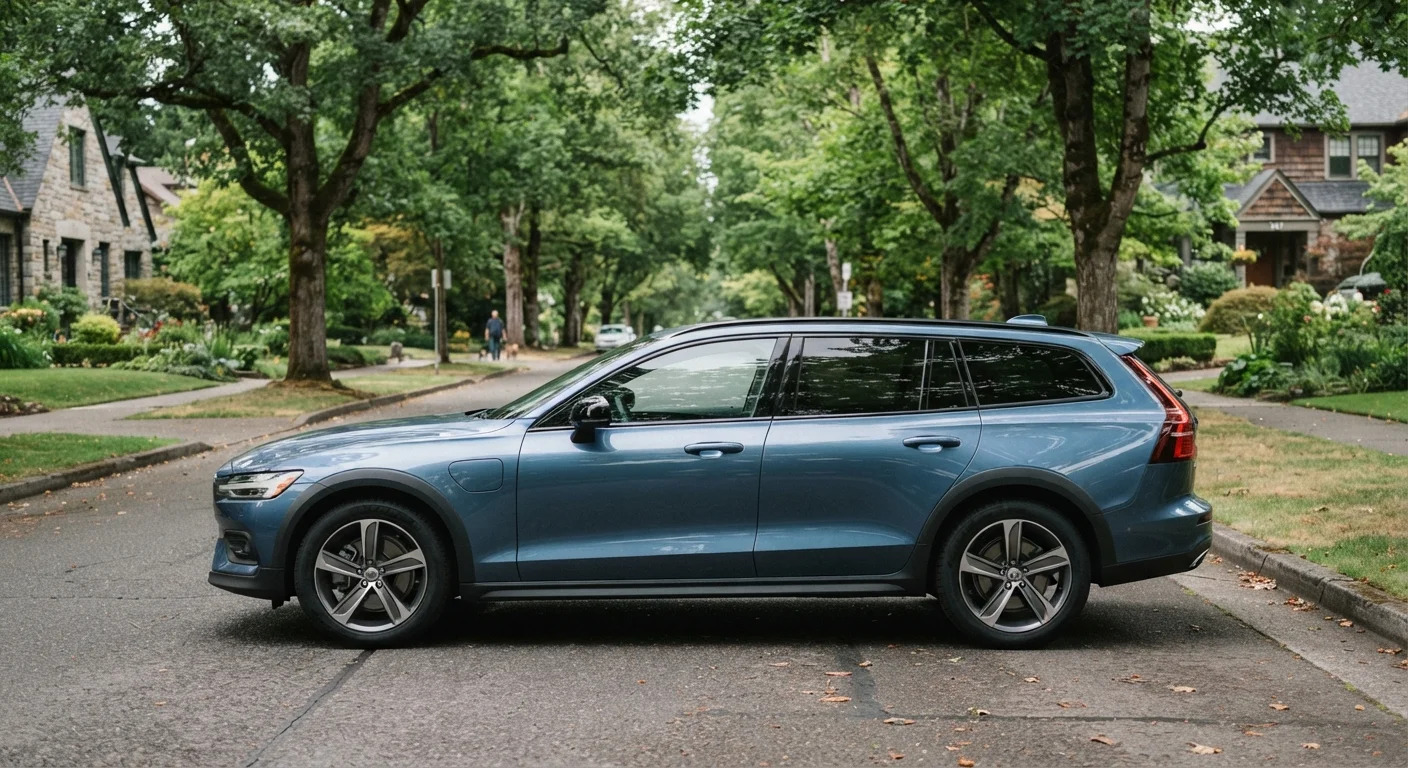
A station wagon is a passenger car body style featuring an extended roofline that runs to the rear of the vehicle, creating a combined passenger and cargo area without a separate trunk. Unlike a sedan, the cargo space is accessible through a rear liftgate or tailgate, and the interior volume is continuous from front to back. This design prioritizes versatility - hauling people and gear in one practical package.
In automotive classification, a station wagon is built on a car platform (unibody construction) and retains car-like ride dynamics, distinguishing it from truck-based SUVs and body-on-frame vehicles.
A Body Style Built for Practicality
Before minivans, before crossovers, and long before the SUV boom redefined the American road, the station wagon was the family vehicle of choice. Roomy, versatile, and built on a car's chassis, the wagon offered a straightforward answer to a straightforward problem: how do you carry a full family and their belongings without buying a truck?
The format is simple - extend the roofline of a sedan all the way to the tail of the car, add a liftgate, and the result is a single interior volume that serves both passengers and cargo without compromise. That functional elegance defined the wagon's appeal for decades.
For a broader grounding in how vehicle body styles differ from one another, see the primer on vehicle body styles - a useful starting point before diving into category comparisons.
~1%
U.S. new-car market share held by wagons
Industry analysts have consistently noted that wagon sales represent a small fraction of the U.S. new vehicle market, in stark contrast to crossover and SUV dominance.
Top 5
Wagon segment rank in several European markets
In countries like Germany and Sweden, estate/wagon variants routinely account for a significant share of mid-size and compact car sales, reflecting enduringly different consumer priorities.
1980s
Decade U.S. wagon sales peaked then collapsed
The introduction of the modern minivan in 1983 and the subsequent SUV boom eroded wagon demand rapidly through the late 1980s and into the 1990s.
What Pushed Wagons Off American Roads
The station wagon's decline in the U.S. wasn't a single event - it was a gradual displacement driven by shifting tastes and two competing body styles.
First came the minivan in the early 1980s. Chrysler's introduction of purpose-built vans with sliding rear doors offered families more interior room and easier access than any wagon could match. For parents loading car seats and strollers, the minivan's raised floor and interior height were genuinely transformative. The case for minivans remains compelling on purely practical grounds.
Then came the truck-based SUV. Through the 1990s, vehicles like full-size and mid-size SUVs offered the cargo utility of a wagon with the perceived toughness of a truck - all-wheel drive, high seating positions, and a visual presence that wagons simply didn't project. American buyers moved decisively in that direction, and automakers followed.
By the early 2000s, most domestic manufacturers had discontinued their wagon lines entirely, redirecting development resources toward crossovers and SUVs.
Not All Wagons Are Equal in Classification
Some vehicles sold as crossovers or SUVs are, in engineering terms, quite close to traditional wagons - particularly compact crossovers with low ride heights. The boundary between a tall wagon and a low crossover is genuinely blurry in the current market. What matters most for practical purposes is ride height, ground clearance, and platform type rather than the nameplate category a manufacturer uses.
Where Station Wagons Still Thrive
The wagon never truly disappeared - it just moved. In Europe and Australia, station wagons (often called estates in the UK or kombis in some markets) remain a mainstream segment. Fuel costs, narrower roads, and different consumer priorities kept the format viable in those markets well into the current era.
Several European manufacturers continue building wagon variants of their mid-size and compact sedans, and those vehicles do reach American dealerships - though in far smaller volumes than their European availability would suggest. For U.S. buyers specifically, the wagon segment is a niche, not a mainstream offering.
Driving enthusiasts have also kept wagons culturally alive. A car-platform wagon offers a lower center of gravity than any crossover, which translates to sharper cornering dynamics and a more connected feel on the road - attributes that matter to a segment of buyers who prioritize the driving experience alongside cargo space.
Understanding how all major vehicle categories fit together is useful context - the guide to core vehicle categories covers the full landscape clearly.
Wagons vs. Crossovers: Where the Lines Blur
The modern crossover is, in many engineering respects, a direct descendant of the station wagon. Both use unibody construction on car platforms; both prioritize interior volume and everyday usability. The difference lies in execution and positioning.
Crossovers ride higher, with increased ground clearance and more upright greenhouse (window) profiles. That raised stance appeals to drivers who want easier entry and exit and a commanding view of traffic. Wagons sit lower, with a sleeker silhouette that typically reduces aerodynamic drag and can contribute to better highway fuel efficiency.
The marketing distinction matters too. The word "wagon" carries decades of suburban-family baggage in American culture, while "crossover" and "SUV" signaled adventure and capability. Automakers recognized that perception shapes purchase decisions, and naming conventions shifted accordingly - even as the underlying engineering grew closer.
Evaluating a Wagon vs. a Crossover
If you're weighing these two formats, consider your actual priorities: road dynamics, load-floor height when loading cargo, and highway fuel efficiency tend to favor wagons, while higher seating position and ground clearance favor crossovers. Test driving both body styles back-to-back on roads similar to your daily route is the most reliable way to feel the difference firsthand.
For readers trying to match a vehicle type to their actual driving patterns, the vehicle types by use case guide offers a practical framework for the decision.
The Wagon's Place in Automotive History
Beyond current-market relevance, station wagons occupy an important place in the broader story of American automotive culture. Wood-paneled "woody" wagons from the postwar era have become collectibles, valued for their era-specific aesthetics and the nostalgia they carry. The classic vehicles hub covers this world in depth for enthusiasts curious about preservation and collecting.
The question of whether a classic wagon should be restored or preserved as-found - with original patina intact - is one collectors debate seriously. The same considerations that apply to any classic car apply here. The barn find vs. restored classic discussion is a useful reference for anyone navigating that decision.
What the station wagon's history ultimately illustrates is how consumer preference and cultural context shape vehicle design as powerfully as engineering. A body style that carried American families for decades didn't fail on practicality - it lost a perception battle. That distinction matters for understanding how vehicle types evolve and why the market looks the way it does today.