

Key Takeaways
Compound Interest
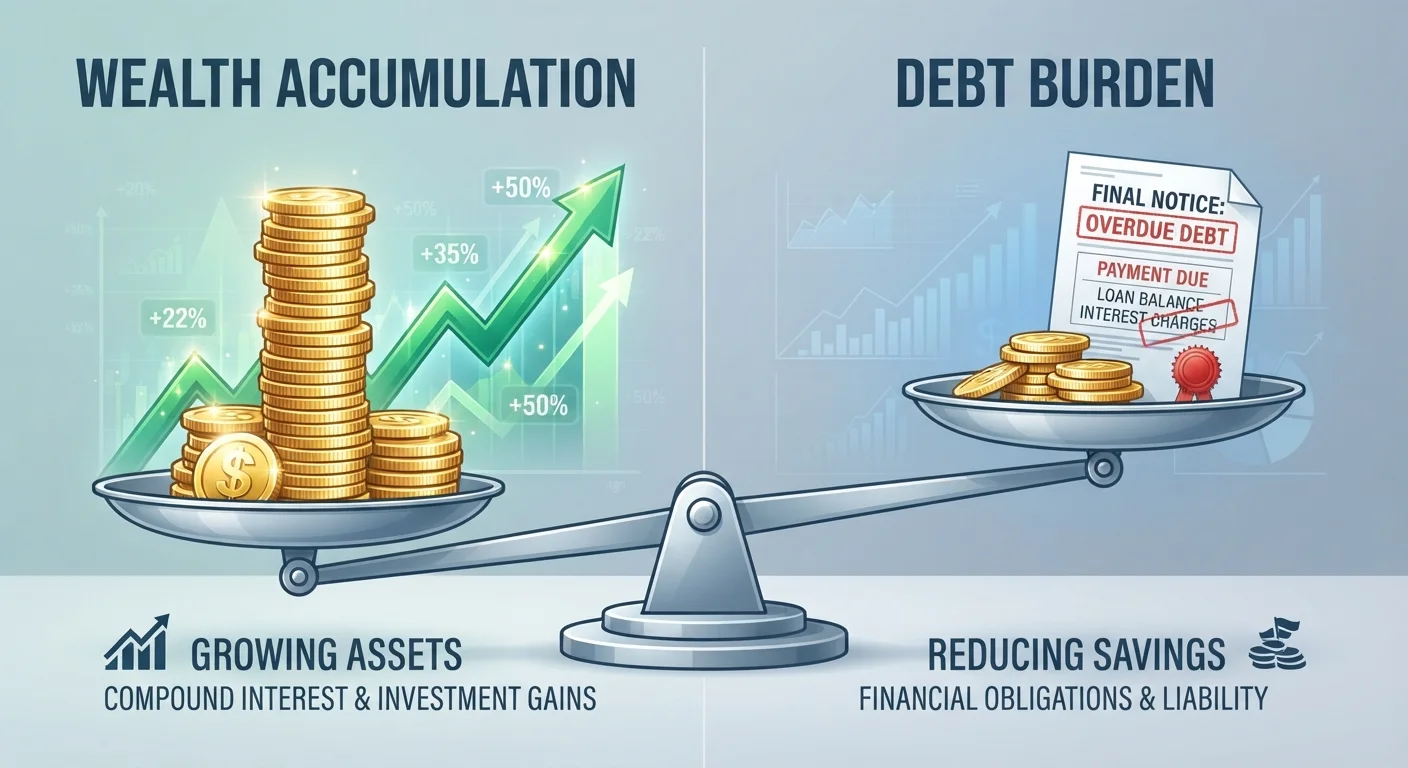
Compound interest is interest calculated on both the original principal and the interest that has already accumulated. Unlike simple interest-which is only calculated on the principal-compound interest causes balances to grow (or shrink) at an accelerating rate over time. This makes it a powerful force for savers and a costly one for borrowers.
Compounding frequency matters: interest can compound daily, monthly, or annually. More frequent compounding means a slightly higher effective annual rate (EAR) compared to the stated nominal rate.
How Compounding Actually Works
The core mechanic is straightforward: at the end of each compounding period, earned interest is added to the balance. In the next period, interest is calculated on that new, larger balance. Each cycle, the base grows a little more-and so does the interest generated.
A simple example: $1,000 earning 5% annually becomes $1,050 after year one. In year two, the 5% applies to $1,050, not $1,000-producing $52.50 instead of $50. The difference looks small early on, but the gap widens every year. Over 30 years, that $1,000 grows to roughly $4,322 with annual compounding-more than four times the original deposit, without adding a single extra dollar.
$4,322
Value of $1,000 after 30 years at 5%
Illustrates annual compounding with no additional contributions; reflects the exponential nature of long-term growth.
~3 years
Time for unpaid debt to double at 24% APR
Based on the Rule of 72 applied to a 24% annual rate, a common range for credit card APRs.
Daily
How often most credit card interest compounds
Most U.S. credit card issuers calculate interest charges using a daily periodic rate applied to the average daily balance.
The key levers are the interest rate, how frequently it compounds, and time. Time is the most underestimated factor. A 25-year-old who saves consistently has decades for compounding to accelerate; someone who starts at 45 has far less runway, and no amount of catch-up fully closes that gap.
When Compounding Works Against You
The same mechanism that builds savings quietly erodes financial health on the debt side. Credit card balances are the most common example. Most cards carry annual percentage rates (APRs) well above 20%, and interest typically compounds daily on the outstanding balance.
Carry a $3,000 balance at 22% APR and make only minimum payments, and you'll pay hundreds of dollars in interest charges while the principal barely moves in early months. The compounding effect means that a balance left largely untouched doesn't stay flat-it grows.
Check Your Card's Daily Periodic Rate
Your credit card's APR divided by 365 gives you the daily periodic rate applied to your balance each day you carry one. Even a few extra days between statement and payment can add to the compounding total. Paying your full statement balance by the due date eliminates interest charges entirely on most cards.
This is why carrying a credit card balance is so costly: each month's unpaid interest becomes part of the principal on which next month's interest is calculated. The debt compounds just as savings do-but in the wrong direction.
Student loans, personal loans, and auto loans can compound too, though their structures vary. Understanding the compounding frequency and rate in any loan agreement is essential before committing.
The Interest Rate Comparison That Changes Decisions
One of the most practical frameworks for managing both savings and debt is comparing interest rates directly. Paying off a debt charging 20% interest delivers a guaranteed, risk-free return of 20%-no investment account reliably matches that.
Conversely, if a debt carries a 4% rate and a retirement account offers an employer match that effectively doubles contributions, the math may favor saving first. The match is an immediate 100% return before a single dollar of investment growth occurs.
The Emergency Fund Exception
Financial planners generally recommend having a small emergency fund-often one to three months of essential expenses-before aggressively paying down debt. Without it, an unexpected expense can force you back onto high-interest credit, undoing progress. Building a modest cash buffer first is widely considered a foundational step, even when carrying debt.
There is no universal answer to whether you should save or pay down debt first. The framework for deciding between debt payoff and savings depends on your specific interest rates, risk tolerance, and whether you have a basic emergency fund in place. A licensed financial adviser can help you model your particular situation.
If you're managing multiple debts, the compounding math is also central to evaluating repayment strategies. Comparing the debt avalanche and debt snowball methods shows how targeting high-interest balances first minimizes total interest paid over time-a direct application of compounding logic.
Putting It to Work: Practical Steps
Understanding the mechanics leads to a few concrete actions that apply regardless of your income level.
- Prioritize high-rate debt aggressively. Any balance above roughly 7-8% is likely costing more in compounding interest than a conservative savings account earns. Pay these down as quickly as your budget allows.
- Increase compounding frequency on savings. When comparing savings accounts, favor those that compound daily over those that compound monthly-the difference adds up over years.
- Automate contributions early. The sooner money enters a compounding account, the more compounding periods it benefits from. Even small, consistent contributions outperform larger lump sums started later.
- Don't let minimum payments fool you. On credit cards, minimum payments are designed to extend repayment, not accelerate it. Paying more than the minimum reduces the principal faster and interrupts the compounding cycle.
If you're working on both goals simultaneously, saving and paying down debt at the same time is genuinely achievable with a clear allocation framework-it doesn't have to be all-or-nothing.
This article is for general informational purposes only and does not constitute personalized financial or investment advice. Consult a licensed financial professional before making decisions about your specific financial situation.