

Key Takeaways
Our Verdict
Morning and evening routines aren't interchangeable — they're designed around your skin's fundamentally different daytime and nighttime behavior. A focused AM routine defends; a well-structured PM routine restores. Together, they create a complete cycle of skin care that neither window can achieve alone.
| Best for | Recommended |
|---|---|
| Those new to skincare looking for a simple framework | Morning Routine |
| Those targeting specific concerns like uneven texture or dullness | Evening Routine |
| Anyone using retinoids or exfoliating acids | Evening Routine |
| Anyone spending time outdoors regardless of season | Morning Routine |
Why Your Skin Doesn't Work the Same Way Around the Clock
Your skin follows a biological rhythm — and it isn't just a metaphor. During the day, the skin's barrier function is more active, working to shield against environmental stressors like UV radiation, pollution, and wind. At night, the skin shifts focus toward cellular repair, increased blood flow to the surface, and the natural turnover of skin cells. This cycle, often called the circadian rhythm of the skin, has real implications for how and when you apply your products.
Understanding this rhythm is the core reason AM and PM routines aren't just marketing categories — they're genuinely distinct windows of opportunity. If you want to understand what each product category is actually doing for your skin, our breakdown of what cleansers, serums, and moisturizers actually do is a useful foundation before layering in timing strategy.
The Morning Routine: Defense First
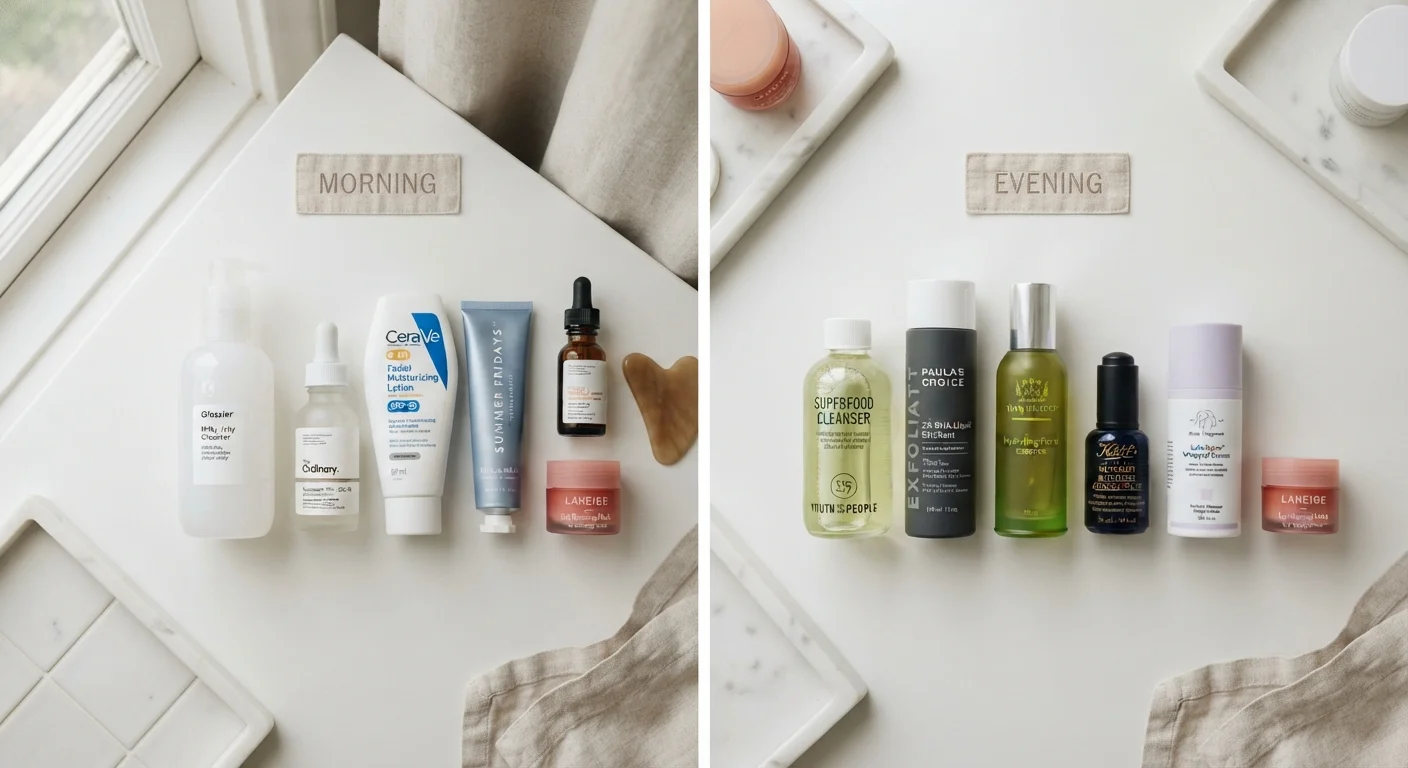
Your AM routine has one primary job: prepare your skin to face the day. That means reinforcing the barrier, locking in hydration, and — above all else — applying sun protection.
| Morning Routine | Evening Routine | |
|---|---|---|
| Primary goal | Protection and defense | Repair and renewal |
| Key non-negotiable | Broad-spectrum SPF | Thorough cleansing |
| Best active ingredients | Vitamin C, antioxidants | Retinoids, AHAs, BHAs |
| Moisturizer weight | Lighter, often SPF-inclusive | Richer, occlusive options fine |
| Cleansing approach | Gentle rinse or light cleanse | Double cleanse recommended |
| Complexity needed | 3 steps covers most needs | 3–4 steps with targeted actives |
A practical morning lineup doesn't need to be long. A gentle cleanser (or even just a water rinse if your skin is dry), a lightweight moisturizer, and a broad-spectrum SPF covers the essential bases. Vitamin C serums are one of the few active ingredients well-suited to mornings because they work synergistically with sunscreen to neutralize free radicals generated by UV exposure — though the evidence on exact benefit is still developing, and consistent SPF remains the non-negotiable anchor.
What mornings are not ideal for: strong exfoliating acids, retinoids, or any ingredient that increases photosensitivity. Applying these and then heading into daylight can reduce their effectiveness and increase the risk of irritation. For a deeper look at why dermatologists treat SPF as the single most evidence-backed habit in skincare, see our piece on daily sunscreen use.
The Evening Routine: Repair and Restore
If mornings are about protection, evenings are about recovery. The skin's nighttime repair processes make PM the smarter window for active, treatment-focused ingredients.
Start Small, Stay Consistent
You don't need a 10-step routine to see results from either window. A three-step AM routine (cleanser, moisturizer, SPF) and a three-step PM routine (double cleanse, active serum, moisturizer) used consistently will outperform an elaborate lineup applied sporadically. Build the habit before expanding the lineup.
Step one at night is thorough cleansing — and if you've worn sunscreen, makeup, or both, a double cleanse (an oil-based cleanser followed by a water-based one) ensures you're actually starting with a clean surface. Leaving sunscreen and debris on skin overnight can interfere with that natural cell renewal process.
After cleansing, nighttime is when retinoids, AHAs (alpha-hydroxy acids like glycolic and lactic acid), and BHAs (beta-hydroxy acids like salicylic acid) earn their place. These ingredients work on texture, tone, and cell turnover — and they're best used when you won't be exposing freshly treated skin to sunlight. A richer moisturizer or a dedicated overnight mask can follow, taking advantage of the skin's increased receptiveness during sleep.
Keep in mind that adding multiple actives at once can cause irritation. If you're building your routine from the ground up, our guide to starting a skincare routine from scratch walks through a manageable approach to layering without overwhelming your skin.
How the Two Routines Work Together
Think of AM and PM routines as two halves of a complete cycle rather than two separate systems. The evening routine clears away the day and supports renewal; the morning routine seals in that renewal and protects it. Skipping one consistently means you're only getting part of the benefit.
80%
Of visible skin aging linked to UV exposure
Photoaging research has long attributed the majority of wrinkles, dark spots, and skin texture changes to cumulative sun damage rather than chronological aging.
~11 PM–4 AM
Peak window for skin cell renewal
Dermatology research suggests skin cell turnover and repair activity is highest during the late-night hours, reinforcing the importance of a consistent PM routine.
A few practical principles tie both windows together: consistency matters more than product count, ingredients need time to work before results are visible, and what you do every day outperforms what you do occasionally with expensive products. For more on the science of what a routine actually accomplishes at the skin level, see what a skincare routine actually does to your skin.
One often-overlooked factor: keeping tools and products themselves clean and unexpired. Bacteria from unwashed brushes or old products can undo good routine habits — something our piece on makeup hygiene habits covers in detail.
This article is for general informational purposes only and is not a substitute for advice from a licensed dermatologist or healthcare professional. If you have a skin condition or concerns about a specific ingredient, consult a qualified provider.