

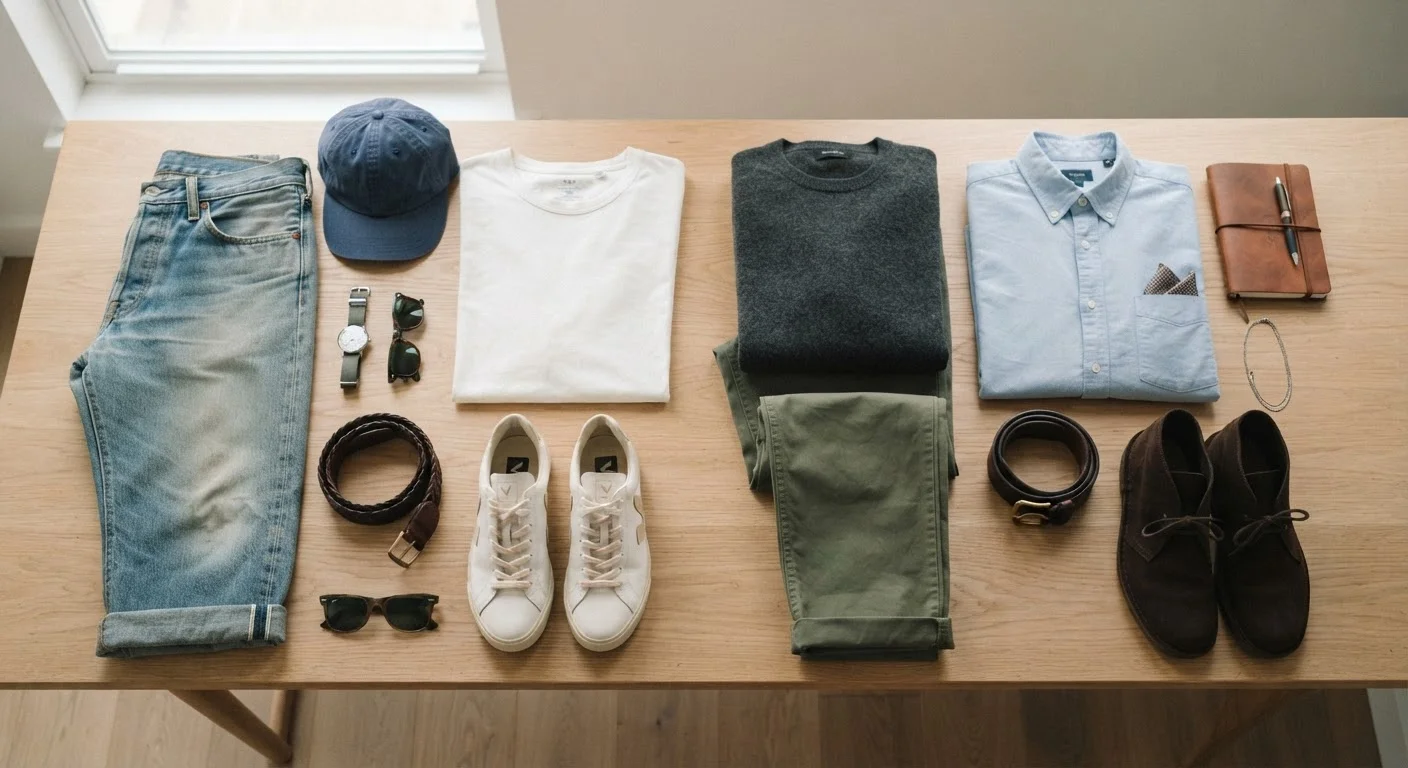
Key Takeaways
Option A
Casual
The relaxed, no-fuss everyday standard.
Best for: Weekend errands, informal hangouts, low-key social settings where comfort is the clear priority.
Option B
Smart-Casual
The polished-but-approachable middle ground.
Best for: Work dinners, semi-formal events, gatherings where you want to look intentional without overdressing.
If you're heading to a backyard cookout, a casual coffee meetup, or weekend errands
Casual
Relaxed settings genuinely call for relaxed clothes. Comfort is the goal here, and dressing up beyond the context can feel as awkward as underdressing.
If you're attending a work dinner, gallery opening, or a date at a sit-down restaurant
Smart-Casual
These settings reward visible effort. Smart-casual signals that you read the room without requiring a full formal ensemble.
If the invite simply says 'smart-casual' and you're unsure of the venue's formality level
Smart-Casual
Err on the slightly more polished end — clean shoes, a structured top, and well-fitted trousers cover most interpretations of the dress code.
If you want one wardrobe that handles both codes without buying duplicates
Smart-Casual
Smart-casual pieces tend to dress down easily, while dedicated casual items rarely dress up. Building from smart-casual gives you more range overall.
What 'Casual' Actually Means (Hint: It Has Limits)
Casual is the most permissive dress code on the spectrum — but it's not a free pass to wear whatever's closest to the bedroom door. In practice, casual means clothes chosen primarily for comfort and ease, without a requirement to signal formality or professional intent.
Think well-worn jeans, plain T-shirts, sneakers, hoodies, and shorts in warm weather. Casual allows distressed denim, athletic-adjacent pieces, and graphic tees without apology. The defining characteristic is effortlessness — the impression that you dressed for yourself and the activity, not for an audience.
That said, context still matters. A casual dress code at a friend's birthday brunch reads differently from casual Friday at a conservative office. Clean, well-fitting basics almost always serve you better than shapeless or visibly worn-out pieces, even when the code is casual. Fit is the great equalizer — clothes that fit well communicate care regardless of the price tag or formality level. See our guide to getting more from fewer clothes for ideas on building flexible casual outfits without expanding your wardrobe.
What 'Smart-Casual' Actually Means
Smart-casual is one of fashion's most frequently misread dress codes — and the confusion is understandable, because it covers a genuinely wide range. At its core, smart-casual means: relaxed in spirit, but deliberately put together. You're not in a suit, but you're clearly not rolling in from the gym either.
The "smart" part refers to visible intention: clothes that fit well, fabrics that look presentable, and combinations that appear considered. Chinos or tailored trousers instead of jeans. A collared shirt, structured blouse, or neat knit sweater instead of a graphic tee. Leather or clean suede shoes instead of beat-up sneakers or flip-flops.
Importantly, smart-casual is not one fixed outfit — it shifts depending on the setting. A smart-casual rooftop event and a smart-casual client dinner can both technically fall under the same label while calling for somewhat different interpretations. When in doubt, think about the venue and the reason for gathering. The more formal the setting or occasion, the more you nudge toward the "smart" end of the spectrum.
| Criterion | Casual | Smart-Casual |
|---|---|---|
| Primary goal | Comfort and ease | Polished but relaxed |
| Typical bottoms | Relaxed jeans, shorts, sweats | Chinos, tailored trousers, dark fitted jeans |
| Typical tops | T-shirts, hoodies, casual knits | Collared shirts, structured blouses, neat sweaters |
| Footwear | Sneakers, sandals, slides | Loafers, leather sneakers, clean boots |
| Fit expectation | Relaxed or oversized fine | Well-fitted; intentional silhouette |
| Fabric tone | Jersey, fleece, worn cotton | Twill, poplin, structured knits |
| Typical settings | Errands, casual meetups, home | Work dinners, gallery events, restaurant dates |
The Real Differences That Matter Day-to-Day
The gap between casual and smart-casual often comes down to three practical factors: fit, fabric, and footwear.
- Fit: Casual allows relaxed and oversized silhouettes. Smart-casual expects clothes to follow your shape — not tight, but intentional. This single variable does more work than any specific garment.
- Fabric: Casual embraces jersey, fleece, and worn cotton. Smart-casual leans toward fabrics with a bit more structure — twill, poplin, ponte, and well-maintained knits. Our breakdown of natural vs. synthetic fabrics can help you identify which materials tend to read more polished.
- Footwear: Perhaps the fastest visual signal — a clean loafer, block-heel boot, or leather sneaker reads smart-casual immediately. Worn athletic shoes, slides, or heavily distressed footwear pulls the entire look back toward casual regardless of what's worn above the ankle.
Accessories also play a subtle role. A structured bag, a simple watch, or a neat belt can push a borderline outfit firmly into smart-casual territory without adding cost or complexity. Body-shape guidance can further help you identify which silhouettes tend to look most intentional for your frame.
When the Dress Code Is Still Unclear
Some invitations use "smart-casual" loosely — and what it means can vary by region, industry, and generation. If you're unsure, it's completely reasonable to ask the host directly or look up the venue's own atmosphere online. Most people appreciate a guest who made an effort to get it right rather than guessing. As a general rule, arriving slightly more polished than necessary causes far less discomfort than arriving underdressed.
Building a Closet That Handles Both Codes
The good news: you don't need two separate wardrobes to navigate casual and smart-casual confidently. A small set of versatile pieces can work across both dress codes depending on how they're styled and combined.
Consider anchoring your wardrobe around items that exist in that productive overlap — dark, well-fitting jeans (which can read casual or smart-casual depending on the top and shoes), a handful of collared shirts or structured tops, one or two pairs of neat trousers, and at least one pair of clean, non-athletic footwear. From there, layering does a lot of heavy lifting: a blazer or structured jacket over a plain tee immediately shifts the look toward smart-casual without requiring a full outfit change.
Pattern choices matter too — thoughtful pattern mixing can add visual interest to a smart-casual look without tipping into overdressed territory. And if you've made past purchases that haven't served either code well, common wardrobe regret patterns are worth understanding before shopping again.
The overarching principle: invest in versatility over volume. A smaller, more deliberate closet navigates dress codes more easily than a large one full of pieces that only work in one specific context.
~65%
Adults unsure what smart-casual means
Surveys by fashion and lifestyle publications consistently find a majority of respondents feel uncertain about interpreting smart-casual dress codes correctly.
3–5 pieces
Versatile items that bridge both dress codes
Style educators commonly suggest that a few well-chosen anchor pieces — fitted trousers, a structured layer, clean footwear — can cover most casual and smart-casual occasions.